


Commercial Water Pumps for Hotels and Office Buildings
Views: 0 Author: Site Editor Publish Time: 2026-09-29 Origin: Site


Inconsistent water pressure creates immediate operational headaches for facility managers. In hotels, sudden drops in shower pressure trigger instant guest complaints. In commercial office buildings, poor flow leaves tenants deeply dissatisfied. Meanwhile, inefficient commercial water pumps quietly inflate your operational expenses month after month. The industry has firmly shifted away from legacy fixed-speed pumps. We now rely on modern, dynamically adjusting systems. New energy efficiency standards and smart building integrations drive this crucial evolution.
Today, facility managers and MEP engineers need a pragmatic, evidence-based framework for evaluating these systems. You must specify commercial water pumps based on building height, demand variability, and strict mechanical footprint constraints. This guide outlines exactly how to select the right equipment. You will learn to evaluate core configurations, assess variable frequency drive benefits, and navigate complex installation realities for high-occupancy properties.
Key Takeaways
Sizing and configuration must balance peak demand capacity (morning hotel showers) with extreme low-flow periods to optimize Total Cost of Ownership (TCO).
A constant-pressure inverter water supply system is the baseline standard for reducing energy consumption and mitigating water hammer effects in modern high-rises.
Mechanical room constraints dictate form factor: vertical multistage pumps optimize floor space, while horizontal setups suit areas with severe height restrictions.
True system reliability requires duplex or triplex redundancy configurations and seamless Building Management System (BMS) integration.
Framing the Procurement Problem: Success Criteria for High-Occupancy Buildings
Every commercial building exhibits a unique hydraulic signature. You cannot apply a one-size-fits-all approach to plumbing systems. Hotels experience extreme demand variability. They see sharp spikes during morning and evening shower hours. Throughout the mid-day slump, demand drops close to zero. Office buildings present a very different load profile. They maintain steady daytime usage. Restroom traffic remains consistent, and HVAC cooling towers require continuous make-up water.
Inconsistent pressure exacts a heavy toll on building infrastructure. Pressure drops directly impact plumbing fixtures. Flush valves fail to operate correctly. Tenant experience suffers immediately. Conversely, over-pressurization damages systems silently. Excessive force accelerates pipe degradation. It blows out valve seals and creates destructive leaks behind walls. Maintaining a perfectly balanced pressure setpoint protects your physical assets.
Energy codes now heavily influence pump evaluations. Guidelines like ASHRAE 90.1 mandate higher efficiency in mechanical systems. Decarbonization goals push commercial real estate owners to cut electrical consumption. Commercial water pumps run continuously. They represent a massive portion of a building's base electrical load. Evaluating your system through an energy compliance lens ensures future-proof operations. You stay ahead of municipal regulations and corporate sustainability targets.
Evaluating Core System Configurations and Footprints
Mechanical rooms rarely offer excess space. Engineers must carefully evaluate equipment form factors before specification. The physical layout dictates which pump configuration will succeed.
The Vertical Approach
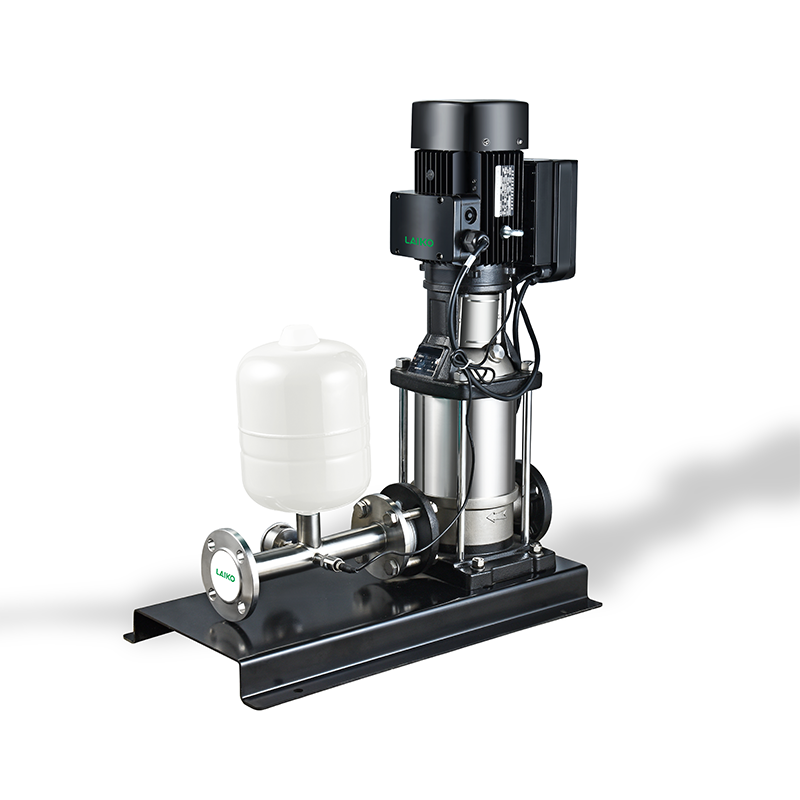
A vertical multistage pump for water supply dominates high-rise construction. High-rise hotels and dense urban buildings rely on them. These units stack multiple impellers vertically. They generate massive head pressure. They easily push water up dozens of stories.
When you evaluate this configuration, look at floor space requirements. Vertical units require minimal square footage. They allow for easy inline installation. Piping connections often align neatly along a single axis. However, you must accept certain trade-offs. Vertical systems demand significant overhead clearance. Technicians need room to pull the motor straight up during repairs. Additionally, vertical configurations can transmit vibrations into the floor. You must install proper inertia bases and isolation pads.
The Horizontal Approach
Many older buildings feature cramped utility rooms. Basements often suffer from very low headroom. A horizontal constant-pressure inverter water supply system provides the ideal solution here. This configuration shines during specific retrofit scenarios.
Maintenance teams highly value horizontal setups. Mechanics enjoy much easier access to internal components. They rarely need overhead lifting gear to service the motors. The system maintains a lower center of gravity. This naturally dampens vibration and reduces noise transmission. The primary trade-off involves physical space. Horizontal systems require a significantly larger floor footprint. You must allocate wider aisle clearances for safe maintenance access.
Pump Configuration Comparison
Configuration Style | Ideal Deployment Scenario | Primary Mechanical Advantages | Notable Trade-offs |
|---|---|---|---|
Vertical Multistage | High-rise towers, tight mechanical rooms | High head capacity, tiny floor footprint | Requires overhead clearance, vibration risk |
Horizontal System | Basements, low-ceiling utility areas | Easy maintenance, low center of gravity | Requires extensive floor space |
The Role of Variable Frequency Drives (VFDs) in Cost Control
Modern building specifications universally demand dynamic controls. Legacy systems relied on constant-speed motors paired with pressure-reducing valves (PRVs). These older setups wasted massive amounts of energy. The motor ran at full speed constantly. The PRV simply choked off the excess pressure. Today, we replace them entirely. A modern constant-pressure inverter water supply system serves as the new baseline standard.
Variable Frequency Drives (VFDs) completely transform operational expenses. We can map specific features directly to financial outcomes.
Load Matching: VFDs adjust the motor speed to match real-time demand. During off-peak hours, the pump slows down. This cuts electricity waste by up to 30-50 percent.
Soft Starting: Motors no longer slam on at full torque. The VFD ramps the speed up gradually. This soft start reduces mechanical stress on the impellers.
Hydraulic Stability: Gradual speed adjustments mitigate hydraulic shock. You eliminate dangerous water hammer effects. This extends the overall lifespan of your piping network.
We must also apply a skeptical lens. VFDs introduce significant electronic complexity. Traditional pumps were purely mechanical. Now, you manage sensitive computers. Drives require clean power. Voltage spikes can destroy their internal boards. Furthermore, VFDs generate heat. They require adequate cooling inside the mechanical room. If your basement gets too hot, the drives will fail prematurely. You must ensure proper ventilation before upgrading.
Critical Evaluation Dimensions for Shortlisting Manufacturers
Procuring commercial water pumps requires rigorous vetting. You cannot simply buy the cheapest unit. Facility teams must evaluate manufacturers across several critical technical dimensions.
Redundancy and Reliability (N+1 Design)
Single-pump systems fail. When they do, the entire building loses water. This outcome remains completely unacceptable for commercial hospitality and office sectors. You must insist on an N+1 design philosophy. Evaluate duplex (two-pump) or triplex (three-pump) booster sets.
These packages use intelligent alternating logic. The controller rotates the lead pump every 24 hours. This ensures equal wear across all motors. More importantly, redundancy guarantees zero downtime. Mechanics can isolate one pump for repairs. The second pump automatically assumes the building load.
Material Construction Standards
Water quality destroys cheap metals. You must assess the necessity of 304 versus 316 stainless steel. Look closely at the impellers and the pump housing. Check your local municipal water reports. High chlorine or chloride levels will pit standard 304 stainless steel over time. If your building sits near the coast or utilizes aggressive water treatments, upgrade immediately. Specifying 316 stainless steel prevents catastrophic corrosion failures.
BMS Integration and Telemetry
Modern facility teams run on data. Isolated mechanical equipment causes blind spots. Demand native BACnet or Modbus compatibility from your pump manufacturer. Do not accept systems requiring proprietary third-party gateways. Gateways often break or lose translation points.
Your team needs real-time telemetry piped directly into the Building Management System. Operators must see fault codes instantly. They need alerts for phase loss or dry-run conditions. Tracking real-time flow rates helps identify hidden pipe leaks early.
Implementation Realities: Retrofits vs. New Construction
Designing a system on paper looks easy. Installing it inside an active, occupied building presents severe logistical challenges. Retrofitting requires careful risk mitigation.
Retrofitting Active Buildings
You cannot simply turn off the water for three days. You must phase the installation carefully. Contractors typically build a temporary bypass line. This keeps the building pressurized while they dismantle the old equipment. It prevents catastrophic water service disruption.
Logistics often kill a project early. Pre-packaged skid systems look great in the factory. However, they rarely fit through standard 36-inch commercial doorways. They exceed the weight limits of standard service elevators. You must evaluate how easily the manufacturer allows you to break down the skid. Bolted manifolds work better than fully welded frames for tight retrofits. Teams carry the pieces individually and reassemble them in the basement.
Commissioning and Testing
Never accept a handed-over system blindly. You must demand a rigorous site acceptance test (SAT). Contractors often rush this final step.
Ensure the commissioning agent tests the set points dynamically. They must verify performance against actual building pressure. Relying solely on theoretical hydraulic models leads to failure. Open fixtures on the top floor. Verify the VFD ramps up smoothly. Simulate a sensor failure. Ensure the backup pump takes over exactly as programmed. Only sign the final acceptance forms after passing these physical stress tests.
Conclusion
Buying commercial water pumps represents a long-term lifecycle investment. It is never just a one-off capital expenditure. The initial purchase price looks substantial upfront. However, 10 to 15 years of continuous energy and maintenance spending quickly dwarfs that initial cost. Selecting the correct configuration based on building height and demand profiles ensures long-term operational efficiency.
Procurement teams should take immediate action before issuing an RFP. Commission an independent hydraulic audit of your building’s actual peak demand. Do not rely on outdated blueprints. Next, demand clear lifecycle expenditure models from competing pump manufacturers. Force them to prove their efficiency claims. A methodical, evidence-based approach guarantees you select a system delivering reliable pressure, happy tenants, and lower utility bills.
FAQ
Q: What is the average lifespan of a commercial booster pump system?
A: A commercial booster system typically lasts 10 to 15 years. This assumes your team performs strict preventative maintenance. Mechanical components like impellers and seals hold up well. However, sensitive electronic components, particularly VFDs, may require replacement at the 7-to-10-year mark due to heat degradation.
Q: How do you calculate the correct pump size for a 200-room hotel?
A: Engineers use fixture unit calculations based on Hunter’s Curve. This probabilistic method predicts simultaneous water usage. Never replace an old pump "like-for-like." Always audit current water usage habits first. Modern low-flow fixtures often mean your building requires a much smaller pump than originally installed.
Q: Can an inverter water supply system be retrofitted onto existing fixed-speed pumps?
A: Yes, it is technically possible. You can add VFDs to existing motors if they carry an inverter-duty rating. However, older motors often fail under VFD stress. Replacing the entire setup with a new packaged skid yields vastly better efficiency, reliability, and full warranty coverage.


