


Stainless Steel Vertical Multistage Pumps for Water Supply and Treatment
Views: 0 Author: Site Editor Publish Time: 2026-08-15 Origin: Site


Modern commercial and industrial infrastructure demands high-head, space-efficient fluid handling. Escalating pressure requirements often push traditional systems to their absolute limits. Premature pump failure in these high-pressure applications causes massive disruptions. Issues like severe corrosion, destructive cavitation, and sudden seal leaks cripple critical operations. Horizontal or cast-iron alternatives frequently fall short. They consume too much valuable floor space. They also degrade rapidly in aggressive environments. Facilities need a highly resilient solution to maintain seamless daily operations. This article provides a strict evaluation framework for specifying a vertical multistage pump. We will guide engineers, facility managers, and procurement teams through material grades, maintenance realities, and specific application requirements. You will learn how to match hydraulic duty points perfectly. This careful selection ensures maximum uptime and operational efficiency for your most demanding fluid systems.
Key Takeaways
Vertical in-line architectures deliver high discharge pressures with a minimal footprint, ideal for retrofits and tight plant rooms.
Material selection between SS304 and SS316 is the primary driver of longevity in corrosive or ultra-pure water applications.
Integration with Variable Frequency Drives (VFDs) is critical for optimizing energy consumption in fluctuating demand scenarios like commercial building water supply.
Prioritizing easy-maintenance vertical multistage pumps (e.g., those with cartridge mechanical seals) significantly reduces long-term operational downtime.
The Engineering Case for Vertical Multistage Architecture
Footprint and Spatial Efficiency
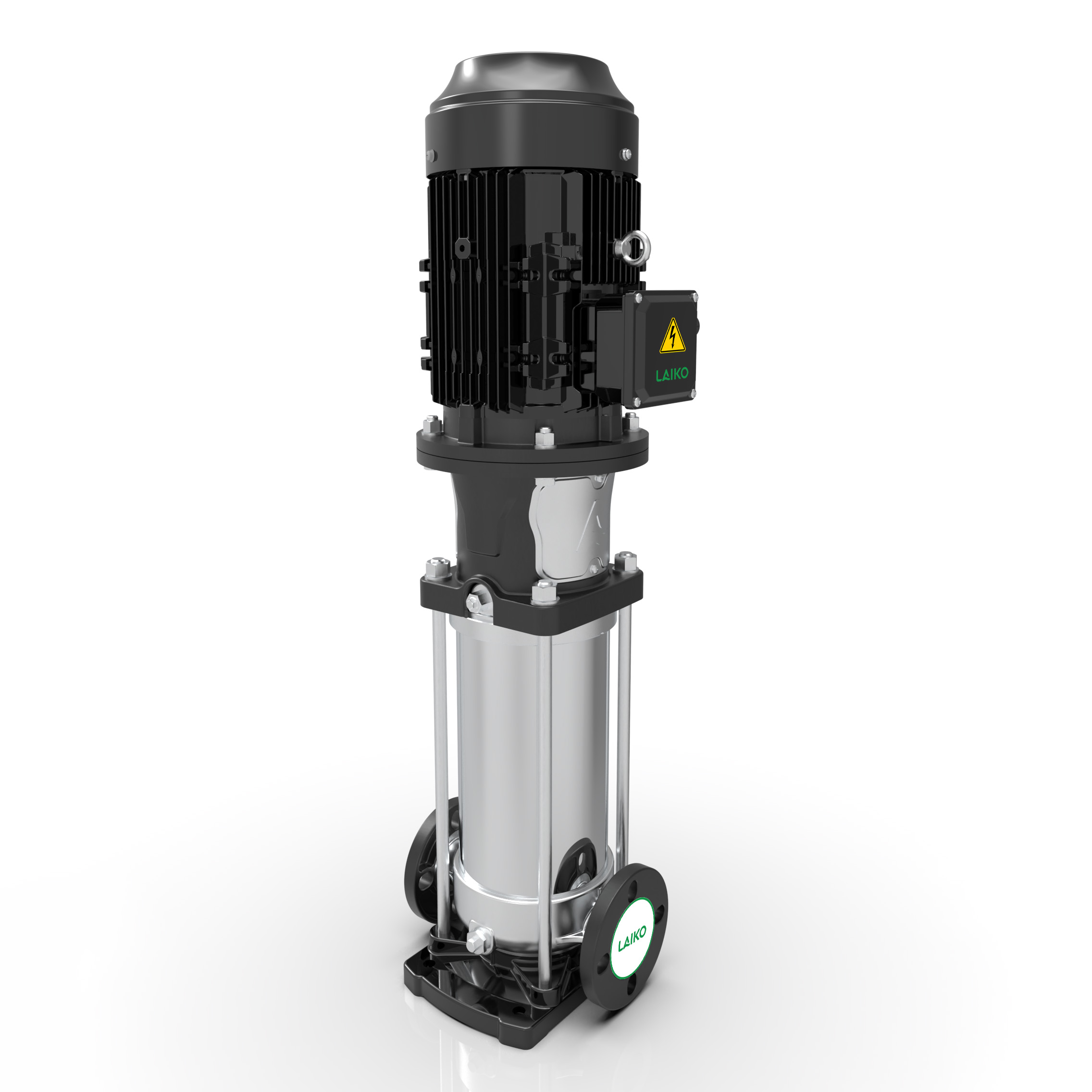
Engineers face severe space constraints in modern plant rooms. A vertical, in-line design solves this spatial challenge immediately. It allows installation in highly restricted footprints. Traditional end-suction pumps sprawl horizontally across the floor. They require massive concrete pads. In contrast, vertical architectures build upward. The motor sits directly above the pump chamber. The inlet and outlet align on the same horizontal axis. They fit perfectly into retrofits, narrow corridors, and cramped utility spaces. You save valuable real estate for other critical infrastructure.
Hydraulic Performance Profile
Hydraulic performance truly sets this architecture apart. Manufacturers stack multiple impellers along a single vertical shaft. This specific configuration achieves immense discharge pressure. The fluid travels upward through each chamber. It gains kinetic energy at every single stage. It builds head gradually. You avoid the need for a massive, oversized single impeller. A massive impeller consumes excessive electricity. This staged approach maximizes hydraulic efficiency. It also heavily reduces destructive mechanical stress on the electric motor.
Implementation Reality
Implementation realities require careful structural planning. These vertical units possess a naturally higher center of gravity. They demand exceptionally stable foundations. Installers must prioritize vibration-dampened concrete pads. Rigid pipe supports remain absolutely mandatory. Proper anchoring prevents destructive resonance during high-speed operations.
Common Mistake: Technicians often ignore proper baseplate leveling during rapid installations. An uneven foundation creates continuous micro-vibrations. These vibrations travel up the shaft. They destroy expensive motor bearings prematurely. Always use precision levels before securing anchor bolts.
Material Selection Risk: Evaluating SS304 vs. SS316
Baseline Grade (SS304)
Selecting the right alloy strictly dictates system longevity. Engineers must evaluate fluid chemistry rigorously. SS304 serves as a highly reliable baseline grade. It handles standard commercial water networks perfectly. Facilities use it frequently for light industrial washing. It excels in non-aggressive fluid transfer. It provides excellent baseline resistance to mild oxidation. However, it possesses chemical limitations. It fails quickly in highly corrosive, chloride-rich environments.
Premium Grade (SS316)
Premium SS316 becomes mandatory for harsher industrial fluids. This premium grade includes a crucial molybdenum addition. Molybdenum drastically enhances resistance to localized pitting. It repels crevice corrosion caused by harsh chemicals. Stainless steel vertical multistage pumps built entirely from SS316 survive aggressive processing environments effortlessly. They outlast standard metals by several decades.
Corrosion Realities
Corrosion realities severely punish incorrect material specifications. Specifying SS304 for high-chloride environments invites immediate disaster. Chlorides aggressively attack the passive chromium oxide layer. This layer normally protects standard stainless steel. Once breached, localized pitting begins rapidly. The metal degrades from the inside out. Chemical treatments attack lesser alloys continuously. This degradation causes sudden mechanical seal blowouts. It also contaminates your entire process system.
What to Watch Out For: Never assume standard municipal water lacks aggressive chlorides. Seasonal water treatments often spike chlorine levels. Always test the specific chemical composition of your fluid before finalizing your material grade.
Compliance & Trust
Compliance builds absolute operational trust. You must specify certified materials for human consumption networks. Look strictly for NSF/ANSI 61 or WRAS certifications. These global standards guarantee safety in potable water applications. They ensure metallic components never leach harmful toxins. They protect public health effectively.
Stainless Steel Alloy Specification Comparison
Material Grade | Key Alloying Elements | Ideal Fluid Types | Environments to Avoid |
|---|---|---|---|
SS304 (Standard) | 18% Chromium, 8% Nickel | Potable water, light coolants, mild washing fluids | High-chloride water, brackish water, strong acids |
SS316 (Premium) | 16% Chromium, 10% Nickel, 2% Molybdenum | Demineralized water, mild acids, aggressive cleaning agents | Direct seawater, highly concentrated sulfuric acids |
Core Applications and Performance Requirements
Water Supply for Office Buildings and Hotels
Urban high-rises present extreme fluid handling challenges. Managing rapid fluctuations in water demand requires intense precision. Occupants create massive usage peaks during morning and evening hours. Yet, the plumbing system must maintain constant pressure across dozens of floors simultaneously. It cannot falter during heavy fixture usage. Guests expect perfect shower pressure instantly.
Engineers solve this complex challenge dynamically. They deploy variable frequency drives (VFDs). VFDs ramp motor speeds up or down intelligently. Facilities arrange these units in multi-pump booster skid configurations. This prevents destructive pipe hammer across aging plumbing networks. It also slashes unnecessary power consumption during quiet off-peak hours. Reliable water supply for office buildings and hotels depends entirely on this automated responsiveness.
Reverse Osmosis Water Treatment
Desalination and water purification demand immense pressure generation constantly. Systems must overcome intense osmotic pressure. They must force raw water through extremely dense semi-permeable membranes. This rigorous process routinely requires continuous operation at 150 to 300 PSI. Standard cast-iron materials fail rapidly in these environments.
Advanced systems for reverse osmosis water treatment rely exclusively on high-grade alloys. Demineralized permeate water acts very aggressively. It behaves remarkably like a hungry solvent. It easily strips vital ions from cast iron or lesser metals. SS316 prevents this destructive ionic stripping entirely. It maintains fluid purity from start to finish.
Industrial Boiler Feed and Fire Jockey Systems
Boiler feed applications push fluid temperatures to their absolute physical limits. High-temperature mechanical seals become absolutely essential here. Standard rubber elastomers melt under these conditions. Continuous-duty reliability prevents catastrophic steam generation failures. The internal components must withstand severe thermal shock daily. We recommend specialized silicon carbide seal faces for these grueling temperatures.
Fire jockey systems perform a fundamentally different duty. They maintain static pressure inside dormant fire protection networks. They compensate for minor pipe leaks automatically. This prevents the massive main fire pumps from triggering unnecessarily. Jockey duty demands highly specialized high-head, low-flow capabilities. The vertical in-line design suits this precise requirement perfectly.
Best Practice: Always install a highly sensitive pressure transducer directly downstream of the jockey pump. This device feeds real-time pressure data back to your controller. It prevents the pump from short-cycling.
Maintenance Realities and System Uptime Optimization
Upfront Material Decisions vs. Long-Term Reliability
Initial specification decisions dictate your long-term maintenance burdens. Choosing premium alloys prevents deferred replacement headaches. You avoid premature system degradation. You secure a decade of uninterrupted performance. Facilities prioritizing high-grade metals experience drastically fewer emergency service calls. They maintain smooth operations consistently.
Downtime Mitigation
Downtime mitigation defines true facility success. Maintenance teams simply cannot afford lengthy repair procedures. Lengthy outages cripple building services and halt industrial output. Plant managers highly value easy-maintenance vertical multistage pumps. They keep critical operations running smoothly. They allow technicians to act quickly and decisively during routine services.
Cartridge Mechanical Seals
Cartridge mechanical seals revolutionize basic pump servicing. Older designs required complete motor removal. Technicians had to disconnect heavy pipework flanges just to reach worn seals. They needed heavy overhead cranes. Cartridge seals eliminate this nightmare completely. Technicians replace the entire seal assembly in mere minutes. They never move the heavy electric motor. They leave the piping completely intact. This matters immensely for tight facility spaces lacking heavy overhead lifting equipment.
The replacement process is remarkably simple:
Isolate the system valves safely.
Remove the external safety coupling guards.
Detach the internal spacer coupling.
Slide the old cartridge out effortlessly.
Drop the new cartridge directly in and secure the bolts.
MTBF (Mean Time Between Failures)
Mean Time Between Failures (MTBF) heavily dictates your annual service schedules. Buyers must plan for realistic wear part replacements. We expect standard wear parts to follow a predictable lifecycle.
Mechanical Seals: Replace them every 8,000 to 15,000 operating hours. This depends entirely on fluid temperature and abrasive content.
Motor Bearings: Regrease them annually. Replace them entirely every 20,000 operating hours to prevent shaft misalignment.
Neck Rings: Inspect them closely during major overhauls. Worn neck rings cause internal hydraulic slip. This ruins your pressure output.
Spacer Couplings: Check physical alignment semi-annually. Perfect alignment prevents excess vibration.
Specification Checklist and Shortlisting Logic
Engineers must follow strict protocols during procurement. A precise specification checklist prevents disastrous field installations. You must evaluate these technical parameters carefully.
Hydraulic Match: Verify the duty point meticulously. Plot the required flow rate (Q) and head (H) directly against the manufacturer's official performance curve. Never oversize the equipment. Oversizing pushes the pump far off its Best Efficiency Point (BEP). Operating off the BEP causes severe vibration. It induces premature bearing failure rapidly.
NPSH (Net Positive Suction Head): Calculate the NPSH available (NPSHa) on-site accurately. Compare it directly against the pump's NPSH required (NPSHr). This complex calculation remains absolutely critical. It prevents destructive cavitation. Cavitation occurs when fluid pressure drops below its vapor pressure. Bubbles form instantly. These bubbles then collapse violently against the spinning impeller. The implosion strips away metal. It destroys impellers quickly in high-temperature or negative-suction setups.
Motor Standards: Demand premium efficiency electrical components. Check specifically for IE3 or IE4 motor ratings. These modern motors run significantly cooler. They waste much less energy as heat. Verify standard DIN or ANSI flange connections. Standardized flanges guarantee seamless, headache-free future replacements without costly pipe modifications.
Next Steps: Demand comprehensive documentation during your RFQ process. Request certified material test reports. Ask for factory performance test curves. Review all warranty limitations thoroughly before issuing a formal purchase order.
Conclusion
Specifying a reliable pumping solution requires deep technical balancing. You must match the exact chemical nature of your fluid against intense hydraulic pressure demands. Standardizing on appropriate stainless steel grades eliminates catastrophic corrosion risks. It guarantees long-term stability for your facility. You protect your entire fluid network.
Audit your current system today. Measure your exact spatial footprint constraints carefully. Calculate your precise NPSHa parameters. Never guess these critical engineering metrics. We strongly encourage you to consult directly with a technical pump distributor. They will customize your sizing perfectly. They will also ensure seamless VFD integration. Incorporating correctly sized stainless steel vertical multistage pumps ensures decades of reliable, optimized performance.
FAQ
Q: What is the difference between vertical and horizontal multistage pumps?
A: The primary difference involves orientation, footprint, and maintenance access. Vertical architectures save massive amounts of floor space. They utilize convenient in-line piping and excel perfectly in high-head applications. Horizontal pumps require much larger foundational footprints. Engineers generally prefer horizontal units for high-flow, lower-head scenarios where vertical overhead clearance remains strictly limited.
Q: Can a vertical multistage pump run dry?
A: Absolutely not. You must never allow these units to run dry. The pumped fluid acts as a crucial lubricant and coolant. It protects the internal mechanical seals and sleeve bearings. Dry running generates immense friction instantly. It causes catastrophic internal component failure within a matter of minutes.
Q: How often should the mechanical seals be replaced?
A: Replacement intervals depend heavily on operating conditions. Standard clean-water applications typically require new seals every 8,000 to 15,000 operating hours. High fluid temperatures reduce this lifespan drastically. Abrasive particles also accelerate seal wear significantly. Continuous duty applications often see longer seal life compared to aggressive, intermittent stop-start duty cycles.
Q: Are these pumps self-priming?
A: Standard vertical multistage pumps are not self-priming. They cannot pull air out of an empty suction line. They require a fully flooded suction line to operate safely. If drawing fluid from a lower tank, you must install a reliable foot valve. You must perform an initial manual prime before startup.


