


Commercial Water Pumps: Types, Uses, and Selection Guide
Views: 0 Author: Site Editor Publish Time: 2026-07-15 Origin: Site


Selecting Commercial Water Pumps represents a critical infrastructure decision for any large-scale facility. It goes far beyond a simple hardware purchase. Make the wrong choice, and you immediately risk high energy bills, chronic maintenance headaches, or catastrophic operational downtime. Modern commercial buildings and industrial plants demand highly precise fluid management. Balancing upfront capital expenditure against long-term operating costs remains absolutely essential for sustainable operations. You must match the equipment capabilities exactly to your systemic demands.
This guide provides an engineering-backed framework for evaluating and categorizing these complex mechanical systems. We will show you how to choose the right pump for your specific operational needs. You will learn the fundamentals of sizing logic, material compatibility, and proactive maintenance strategies. By understanding these core principles, you can protect your infrastructure investment and ensure reliable daily performance.
Key Takeaways
Pump selection must prioritize Total Dynamic Head (TDH) and Net Positive Suction Head (NPSH) over basic horsepower to prevent system failure (e.g., cavitation).
Commercial centrifugal pumps dominate high-volume needs, while commercial inline and booster pumps serve specialized space and pressure constraints.
According to data from the Hydraulic Institute and ASHRAE, approximately 65–70% of a pump’s lifecycle cost comes from energy consumption and maintenance; integrating Variable Frequency Drives (VFDs) is critical for modern ROI.
Material selection (e.g., stainless steel vs. cast iron) strictly depends on fluid corrosivity and operating temperatures.
The Business Impact of Pump Selection
Engineers and facility managers often underestimate how deeply pump selection impacts overall business continuity. Choosing an improperly sized unit creates cascading failures across your entire mechanical system.
Operational Continuity vs. Failure Risks
Undersized pumps consistently fail to meet peak demand. They struggle to deliver necessary flow rates. This flow starvation compromises cooling towers, heating loops, and essential plumbing fixtures. Conversely, oversized pumps waste massive amounts of electrical energy. When you install an oversized unit, it operates far away from its Best Efficiency Point (BEP). Operating off the BEP introduces severe internal turbulence. This turbulence creates destructive vibrations. Over time, these vibrations destroy mechanical seals, shatter bearings, and lead to premature catastrophic failure.
Lifecycle Financial Impact
You cannot evaluate a pump solely on its initial purchase price. The initial capital expenditure typically represents only a small fraction of the financial burden over its lifespan. According to the Hydraulic Institute and ASHRAE guidelines, routine maintenance and unexpected repairs consume approximately 25 percent of total lifecycle costs. Energy consumption dominates the financial equation, accounting for 40 to 45 percent of the long-term expenses. With approximately 65–70% of a pump’s lifecycle cost coming directly from these ongoing operational factors, upgrading to high-efficiency motors yields rapid financial returns. Ignoring energy performance guarantees inflated utility bills for decades.
Compliance and Efficiency Standards
Modern regulatory environments demand strict compliance. The Department of Energy (DOE) enforces rigorous Pump Energy Index (PEI) regulations. Furthermore, ASHRAE sets specific energy standards for commercial building design. Evaluating your equipment against these current benchmarks ensures legal compliance. It also guarantees you are capturing the maximum available energy savings.
Core Types of Commercial Water Pumps
You must understand the distinct mechanical profiles of different pump categories. Each design serves a highly specific operational purpose.
Commercial Centrifugal Pumps
commercial centrifugal pumps remain the industry standard for general fluid transfer. These machines rely on spinning impellers to generate centrifugal force. The spinning action rapidly throws fluid outward into a volute casing. This continuous movement builds kinetic energy and pushes fluid through the discharge nozzle.
They are best suited for high flow rates and low-viscosity fluids. You will commonly find them moving bulk water or supporting large cooling towers. There are two primary sub-variants to consider. End-suction designs are simple, compact, and highly common. Split-case designs feature a casing divided along the shaft axis. This split design allows technicians to inspect the impeller without disturbing the connected piping.
Commercial Inline Pumps
commercial inline pumps feature a unique straight-line flow path. The suction nozzle and discharge nozzle sit on the exact same axis. Fluid moves straight through the housing without changing direction.
These units are perfect for facilities facing severe mechanical room space limitations. They serve as the primary choice for HVAC hydronic loops. The major advantage lies in their pipe-mounted design. They drastically reduce the need for large concrete baseplates or extensive floor footprints. You can often mount them directly into existing piping runs.
Commercial Booster Pumps
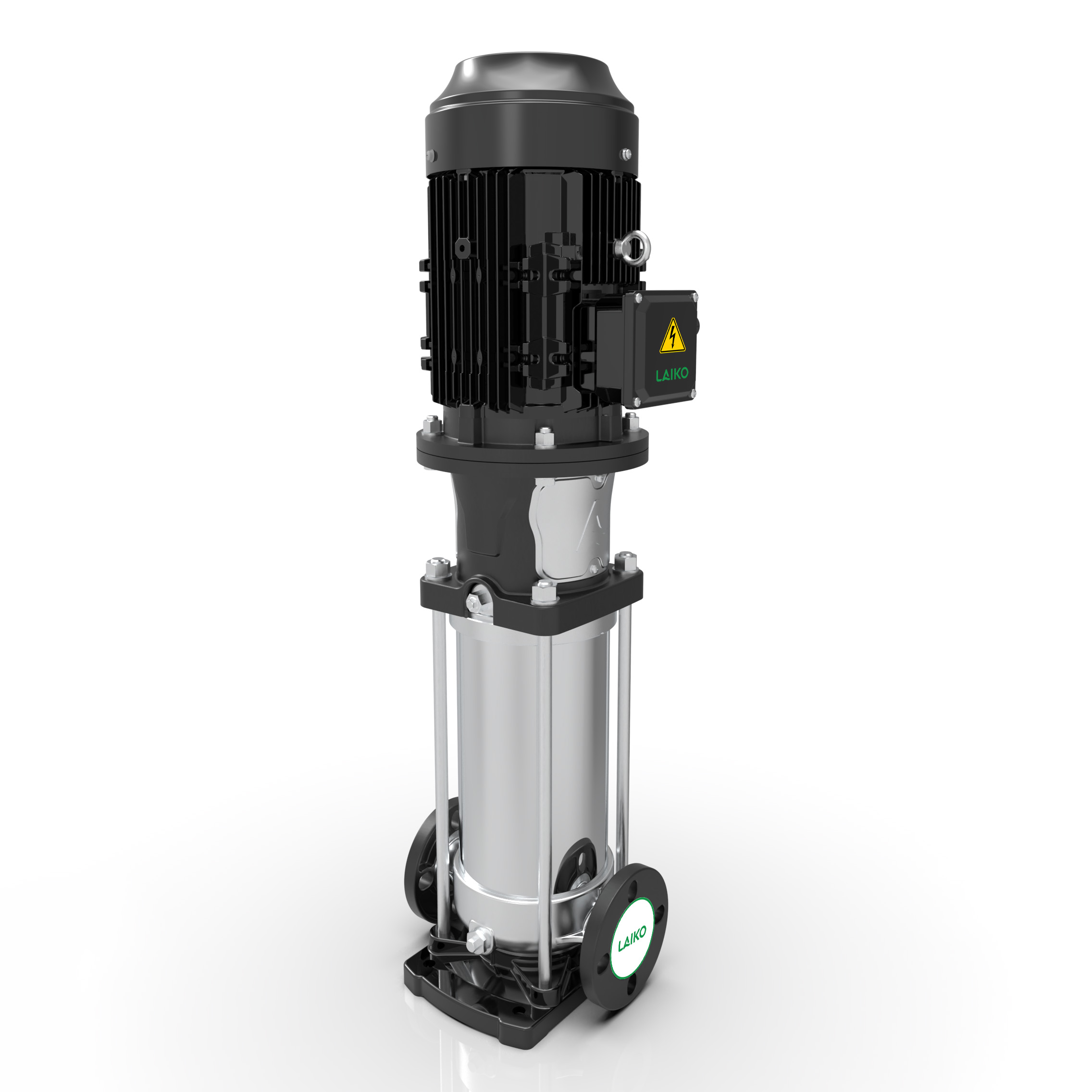
commercial booster pumps tackle demanding pressure requirements. These are typically multi-stage units. They utilize multiple impellers stacked in series. Each successive impeller increases the fluid pressure further.
They are engineered specifically to increase systemic pressure rather than just transfer high fluid volumes. You need them for high-rise commercial buildings to overcome gravity. They also augment municipal water pressure and drive high-pressure industrial washdown systems.
Submersible and Sump Pumps
Submersible units are hermetically sealed machines. The motor securely couples directly to the pump body. Manufacturers design them to operate completely underwater without short-circuiting.
They excel at wastewater management and groundwater extraction. Commercial properties rely on them heavily for basement flood prevention. Because they sit underwater, they never suffer from loss of prime.
Common Commercial Applications and Use Cases
Different facilities demand specialized fluid handling capabilities. We can categorize these applications by their primary operational demands.
HVAC and Hydronic Systems: Climate control depends heavily on moving chilled and hot water efficiently. These applications require continuous, reliable duty cycles. You must prioritize VFD compatibility here. Variable loads fluctuate throughout the day, and VFDs modulate pump speeds to match exact cooling or heating demands.
Plumbing and Pressure Management: High-rise buildings face massive gravitational resistance. Delivering consistent water pressure to the penthouse requires precise engineering. Facilities manage this variable demand using redundant setups. Duplex or triplex pump skids ensure uninterrupted water flow even if one unit requires maintenance.
Industrial Process Water: Manufacturing plants transfer water for heavy industrial processes. Applications include equipment cooling jackets and high-pressure boiler feeds. These environments demand robust construction. You must specify high-temperature seals or chemical-resistant internals to survive harsh conditions.
Wastewater and Dewatering: Managing raw effluent and storm runoff introduces solid debris into the fluid path. Standard impellers will clog immediately. This application requires distinct solids-handling capabilities. You must utilize vortex impellers or aggressive chopper designs to process heavy sludge and debris.
Application Match Chart
Application Focus | Recommended Pump Design | Key Requirement |
|---|---|---|
High-Rise Water Pressure | Multi-stage Booster | High pressure output, duplex setup |
HVAC Chilled Water Loops | Vertical Inline | Space efficiency, continuous duty |
Cooling Tower Transfer | End-Suction Centrifugal | High volume, high flow rates |
Stormwater Runoff | Submersible / Sump | Solids handling, sealed motor |
The Selection Framework: Sizing and Specification Logic
Guessing required pump sizes leads to expensive failures. You must follow strict mathematical and engineering principles when specifying equipment.
Calculating Flow Rate (GPM) and Total Dynamic Head (TDH)
Flow rate dictates how much fluid moves per minute. Gallons Per Minute (GPM) represents the total volume required by your system. However, pushing that volume requires overcoming resistance.
Total Dynamic Head (TDH) measures this total resistance. You cannot just measure vertical elevation. You must calculate systemic friction loss. Every foot of pipe, every 90-degree elbow, and every isolation valve adds friction. You add the elevation change to the total friction loss to determine the true TDH requirement. Accurate TDH calculations prevent undersizing.
Understanding NPSH and Cavitation Risk
Net Positive Suction Head (NPSH) remains the most critical, yet misunderstood, concept in pump engineering. You must evaluate two distinct values. NPSHa represents the absolute pressure available at the pump suction nozzle. The system design dictates this number. NPSHr represents the minimum pressure required by the pump to operate smoothly. The manufacturer dictates this number.
If your NPSHa falls below the NPSHr, the fluid boils locally inside the casing. This phenomenon is called cavitation. Cavitation creates microscopic vapor bubbles that implode violently against the impeller. These implosions pit the metal, destroy the impeller structure, and immediately void manufacturer warranties. Always ensure generous NPSH margins.
Material Compatibility and Seal Selection
Your fluid dictates your construction materials. Using standard cast iron for acidic water destroys the unit in weeks.
Cast Iron: The standard choice for clean, non-corrosive system water.
Bronze: Necessary for potable drinking water to ensure low lead compliance.
Stainless Steel: Mandatory for highly corrosive fluids, acidic environments, or stringent sanitary processing.
Seal selection also impacts longevity. Packing glands are traditional and inexpensive, but they require a continuous, slight drip to remain lubricated. Mechanical seals prevent all visible leakage. They cost more upfront but protect mechanical room floors and reduce maintenance intervals.
Motor Sizing and Power Constraints
You must properly size the electric motor driving the fluid end. Commercial settings almost universally require 3-phase power. Evaluate your facility's voltage capabilities before ordering.
Ensure the motor is non-overloading across the entire performance curve. If system pressure drops unexpectedly, the pump will push more flow. This increased flow draws higher amperage. A non-overloading motor handles this spike without tripping breakers or burning out internal windings.
Implementation Risks and Maintenance Realities
Even the most perfectly engineered unit will fail if installed improperly or neglected.
Installation Pitfalls
Contractors often rush installations. The most common rollout failure involves severe pipe strain. Piping must be independently supported. The pump casing should never bear the physical weight of attached pipes. Pipe strain distorts the casing, binds the impeller, and destroys mechanical seals.
Base-mounted units face alignment risks. If the motor shaft and pump shaft are not perfectly laser-aligned during commissioning, the resulting vibration will quickly destroy the coupling and internal bearings.
Integration with Building Management Systems (BMS)
Modern commercial properties require intelligent infrastructure. You should integrate your pumping systems directly into your Building Management System (BMS).
This integration relies heavily on smart sensors. You can monitor bearing temperature, housing vibration, and electrical amperage in real time. Combining smart sensors with VFDs allows the BMS to automatically modulate speeds. This prevents excessive energy draw and alerts maintenance teams before a catastrophic failure occurs.
Routine Maintenance Requirements
You need a realistic, disciplined maintenance schedule. Neglect is the primary cause of premature failure.
Recommended Maintenance Schedule
Interval | Action Required | Expected Outcome |
|---|---|---|
Daily | Visual leak check, listen for abnormal noise | Early detection of failing seals or cavitation |
Quarterly | Laser alignment check, regrease bearings | Prevent excessive vibration and heat buildup |
Annually | Internal seal inspection, motor megger test | Ensure electrical safety and fluid containment |
Sticking to this strict timeline establishes operational realism. It keeps your warranty intact and extends equipment life by years.
Conclusion
Buying the right equipment is ultimately an exercise in matching exact system curves to specific performance curves. You cannot rely on guesswork when operational stability is on the line. Protect your investment by prioritizing precise engineering over upfront cost savings.
Audit your system: Clearly document your exact flow (GPM) and systemic resistance (TDH) requirements.
Calculate NPSH meticulously: Prevent destructive cavitation by ensuring your available suction pressure exceeds the required minimum.
Match materials to the fluid: Choose stainless steel, bronze, or cast iron based purely on temperature and corrosivity.
Integrate smart controls: Utilize VFDs and connect sensors to your BMS for long-term energy optimization.
Before finalizing your procurement, assess your mechanical room spatial constraints carefully. Always consult with a qualified application engineer or specialized distributor. Their practical experience ensures your final specification aligns perfectly with your facility’s rigorous demands.
FAQ
Q: How long should a commercial water pump last?
A: A high-quality commercial unit typically lasts 10 to 15 years with proper maintenance. However, wearable internal components like mechanical seals, couplings, and motor bearings will require replacement much sooner, often every 3 to 5 years.
Q: Should I repair or replace an aging commercial centrifugal pump?
A: Apply the 50 percent rule. Replace the unit entirely if repair costs exceed 50 percent of a new pump's price. Additionally, if upgrading to a new, highly efficient model pays for itself in energy savings within three years, replacement is the better financial decision.
Q: What happens if my pump is oversized for my system?
A: Operating an oversized unit forces it to run left of its Best Efficiency Point (BEP). This creates immense internal turbulence, excessive vibration, thermal buildup, and premature bearing failure. It also wastes massive amounts of electrical energy daily.
Q: Do I always need a VFD for a commercial booster pump?
A: While not universally mandatory, VFDs are strongly recommended. High-rise buildings face highly variable water demand throughout the day. VFDs prevent damaging short-cycling, reduce mechanical wear, and drastically cut energy waste by running the motor only as fast as currently needed.


