


What Is The Difference between Centrifugal And Non Centrifugal Pumps?
Views: 0 Author: Site Editor Publish Time: 2026-01-28 Origin: Site


Pumps are an essential component of fluid handling systems in a variety of industries. They are responsible for transferring fluids from one location to another, ensuring smooth operations in processes that require the movement of liquids or gases. There are two primary categories of pumps: centrifugal and non-centrifugal. Each type of pump has its own unique working principle, advantages, and specific applications.
This article will explore the fundamental differences between centrifugal and non-centrifugal pumps, focusing on their working mechanisms, advantages, key applications, and which one is best suited for particular situations. Understanding these differences can help in making informed decisions when selecting pumps for various fluid systems.
Understanding Centrifugal Pumps
Basic Working Principle of Centrifugal Pumps
Centrifugal pumps use centrifugal force to move fluids. The heart of the centrifugal pump is the impeller, which spins rapidly when powered by an electric motor. As the impeller spins, it generates centrifugal force, which pushes the fluid outward through the pump casing. This movement increases the kinetic energy of the fluid, which is then converted into pressure as the fluid exits the pump.
The primary function of centrifugal pumps is to transport fluids at a steady flow rate, especially in applications where high flow and low pressure are required. The design of centrifugal pumps allows for relatively simple construction and maintenance, making them a popular choice in many industries.
Design and Components
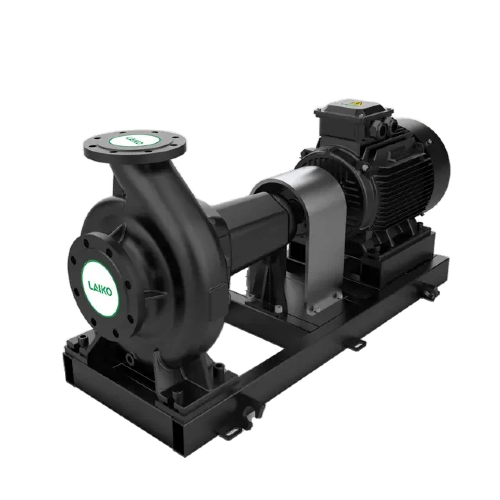
Centrifugal pumps typically consist of the following key components:
Impeller: The rotating component that transfers energy to the fluid.
Pump Casing: The outer housing that directs the fluid flow through the pump.
Suction and Discharge Nozzles: The points where fluid enters and exits the pump.
Shaft and Bearings: The mechanical parts that connect the impeller to the motor and support its rotation.
These components work together to generate the pressure required to move fluids through pipes or other transport systems.
Applications of Centrifugal Pumps
Centrifugal pumps are widely used in a variety of industries due to their versatility and efficiency. Some common applications include:
Water Supply: Centrifugal pumps are used in municipal water supply systems, irrigation systems, and water treatment plants.
Chemical Industry: They are employed in transferring chemicals and other fluids in chemical processing plants.
Oil and Gas: Centrifugal pumps are used in the extraction and transport of oil, gas, and other petroleum products.
HVAC Systems: These pumps circulate water in heating, ventilation, and air conditioning systems.
Advantages of Centrifugal Pumps
Centrifugal pumps offer several advantages, making them the pump of choice for many applications:
Simplicity of Design: The design of centrifugal pumps is straightforward, which leads to lower manufacturing and maintenance costs.
Low Maintenance: Since the pumps have fewer moving parts, they generally require less maintenance and have a longer lifespan.
Efficiency: Centrifugal pumps are highly efficient for moving large volumes of fluid at low to moderate pressures.
Versatility: These pumps can handle a wide variety of fluids, including water, chemicals, and oils, across numerous industries.
Exploring Non-Centrifugal Pumps
Basic Working Principle of Non-Centrifugal Pumps
Non-centrifugal pumps operate using different mechanisms compared to centrifugal pumps. While centrifugal pumps use centrifugal force, non-centrifugal pumps rely on mechanical displacement or positive pressure to move fluids. These pumps include positive displacement pumps, gear pumps, diaphragm pumps, and piston pumps.
The working principle of non-centrifugal pumps involves trapping a fixed amount of fluid in a cavity and then forcing it through the pump by displacing the liquid using mechanical force. This makes non-centrifugal pumps ideal for precise fluid handling, such as in metering applications, or for handling viscous fluids where centrifugal pumps might struggle.
Types of Non-Centrifugal Pumps
There are several types of non-centrifugal pumps, each designed for specific applications:
Positive Displacement Pumps: These pumps operate by trapping a fixed amount of fluid and forcing it into the discharge pipe.
Gear Pumps: Gear pumps use two interlocking gears to transfer fluids. These pumps are widely used in industries dealing with high-viscosity fluids.
Diaphragm Pumps: Diaphragm pumps use a flexible diaphragm that moves back and forth to create suction and force fluid through the pump.
Piston Pumps: Piston pumps utilize a piston inside a cylinder to displace fluid. They are used in high-pressure applications where centrifugal pumps would not be effective.
Applications of Non-Centrifugal Pumps
Non-centrifugal pumps are ideal for applications where high precision, higher pressures, or handling thicker fluids are required. Some common applications include:
Chemical Industry: Non-centrifugal pumps are used to transfer high-viscosity fluids or corrosive chemicals.
Food and Beverage: Gear pumps and diaphragm pumps are used in the food industry for handling oils, syrups, and other viscous materials.
Pharmaceuticals: Positive displacement pumps are commonly used for metering and dosing liquids in pharmaceutical manufacturing.
Hydraulic Systems: Piston pumps are often used in hydraulic systems to provide high pressure.
Advantages of Non-Centrifugal Pumps
Non-centrifugal pumps have distinct advantages, particularly in specialized applications:
Ability to Handle Viscous Fluids: Non-centrifugal pumps can effectively handle high-viscosity fluids that centrifugal pumps cannot efficiently move.
Precise Flow Control: These pumps are capable of delivering a constant and accurate flow of fluid, making them ideal for metering applications.
Higher Pressure Capabilities: Non-centrifugal pumps can generate higher pressures compared to centrifugal pumps, making them suitable for high-pressure applications.
Key Differences Between Centrifugal and Non-Centrifugal Pumps
Operating Principle
Feature | Centrifugal Pumps | Non-Centrifugal Pumps |
Mechanism | Uses centrifugal force to move fluids. | Uses mechanical displacement to move fluids. |
Flow Control | Flow is variable depending on pressure. | Flow is constant and precisely controlled. |
Pressure Handling | Suitable for low to medium pressure. | Capable of handling high pressure. |
Centrifugal pumps rely on centrifugal force generated by the impeller to transfer fluid. Non-centrifugal pumps, on the other hand, use displacement to force a fixed amount of fluid through the pump.
Flow Characteristics
Centrifugal Pumps: These pumps are best suited for applications that require high flow rates and lower pressures. They are designed to operate effectively in systems with constant flow.
Non-Centrifugal Pumps: These pumps are ideal for applications requiring consistent, precise flow control, especially in systems where the pressure needs to be maintained at a high level.
Performance and Efficiency
Feature | Centrifugal Pumps | Non-Centrifugal Pumps |
Efficiency for High Flow | High efficiency for high-flow, low-pressure applications. | Less efficient for high-flow, more suited for high-pressure. |
Performance at High Pressure | Not effective at high pressures. | Effective in high-pressure environments. |
Centrifugal pumps generally perform better for high-flow, low-pressure systems, while non-centrifugal pumps excel in high-pressure applications where more precise flow control is needed.
Viscosity Handling
Centrifugal pumps are not effective at handling high-viscosity fluids, as the fluid cannot flow easily through the pump. Non-centrifugal pumps, however, are designed to handle thicker fluids and are preferred for applications involving oils, syrups, and other viscous materials.
Maintenance and Durability Comparison
Centrifugal Pumps
Centrifugal pumps are known for their low maintenance requirements. Due to their simple design, they do not have many moving parts that could wear out over time. The primary maintenance tasks involve checking for leaks, inspecting the impeller, and ensuring that the bearings and seals are in good condition. Regular maintenance ensures optimal performance and extends the lifespan of the pump.
Non-Centrifugal Pumps
Non-centrifugal pumps, particularly positive displacement pumps, tend to require more maintenance due to their more complex design. These pumps have more moving parts, such as gears, diaphragms, or pistons, which need to be regularly inspected for wear and tear. Additionally, because non-centrifugal pumps are often used in demanding applications (such as handling thick fluids or high pressures), they may require more frequent servicing to ensure reliable operation.
Which Pump Type to Choose?
When deciding between centrifugal and non-centrifugal pumps, several factors should be considered:
Flow Rate: Centrifugal pumps are better suited for applications requiring high flow rates, while non-centrifugal pumps are better for precise flow control.
Pressure: For high-pressure applications, non-centrifugal pumps are more suitable, as centrifugal pumps are not efficient at handling high pressures.
Fluid Type: If the fluid is viscous or has a high solid content, non-centrifugal pumps are the better choice.
Cost and Maintenance: Centrifugal pumps are more cost-effective and require less maintenance, whereas non-centrifugal pumps tend to be more expensive and require more frequent upkeep.
Conclusion
Understanding the difference between centrifugal and non-centrifugal pumps is essential when selecting the right pump for your specific needs. Centrifugal pumps are designed for high-flow, low-pressure systems, offering simplicity in design and low maintenance. They are highly efficient in applications where large volumes of fluid need to be transported with minimal pressure. In contrast, non-centrifugal pumps excel in high-pressure applications and provide precise flow control, making them ideal for metering systems and handling viscous fluids.
At Laiko Pump, we offer a range of centrifugal and non-centrifugal pumps designed to meet diverse industrial requirements. Whether you need efficient, high-flow pumps or precise, high-pressure solutions, we have the expertise and products to support your system’s needs. Our team is ready to help you select the perfect pump solution and provide ongoing support for installation and maintenance. For more information or inquiries, feel free to reach out to us directly. Let us assist you in optimizing your fluid handling systems with the right pump technology.
FAQ
What is the main difference between centrifugal and non-centrifugal pumps?
Centrifugal pumps use centrifugal force to move fluids, whereas non-centrifugal pumps rely on mechanical displacement or positive pressure to move fluids.
Which type of pump is better for high-viscosity fluids?
Non-centrifugal pumps, such as gear pumps and diaphragm pumps, are better suited for handling high-viscosity fluids.
Are centrifugal pumps more energy-efficient?
Centrifugal pumps are typically more energy-efficient for high-flow, low-pressure applications.
Can non-centrifugal pumps handle high-pressure systems?
Yes, non-centrifugal pumps are designed for high-pressure applications, unlike centrifugal pumps, which are not as effective in such environments.


