


What Is a Back Pull-Out End-Suction Pump?
Views: 0 Author: Site Editor Publish Time: 2026-11-15 Origin: Site


Facility managers and engineers face a relentless battle every single day. You must constantly balance initial equipment costs against long-term maintenance overhead. Unexpected downtime destroys production schedules and eats heavily into operational margins. Standard centrifugal pumps often compound this problem significantly. They force maintenance teams to dismantle complex pipework just to perform basic internal inspections. This outdated approach turns a simple seal replacement into a massive logistical headache.
Back pull-out designs completely eliminate this specific bottleneck. They represent a specialized structural iteration engineered to radically reduce Mean Time To Repair (MTTR). By keeping the pump casing bolted securely in place, you protect the integrity of your piping systems. You never have to disturb heavy suction or discharge lines. In this comprehensive guide, we will explore the precise mechanics behind this architecture. You will learn key sizing criteria, discover hidden implementation risks, and see exactly how it compares to alternative fluid handling setups.
Key Takeaways
Maintenance Efficiency: Back pull-out designs allow operators to remove the motor, coupling, and impeller without disconnecting the volute casing from the suction or discharge piping.
Cost of Ownership: While initial installation may require a slightly larger footprint due to the spacer coupling, the design drastically lowers lifecycle labor costs.
Alignment Preservation: By leaving the casing bolted to the baseplate and pipework, the risk of inducing pipe strain or requiring complex realignments post-maintenance is heavily mitigated.
Specification Flexibility: These configurations are standard across most heavy-duty horizontal single-stage end-suction pumps, making them adaptable for diverse industrial fluid handling scenarios.
Decoding the Back Pull-Out Architecture
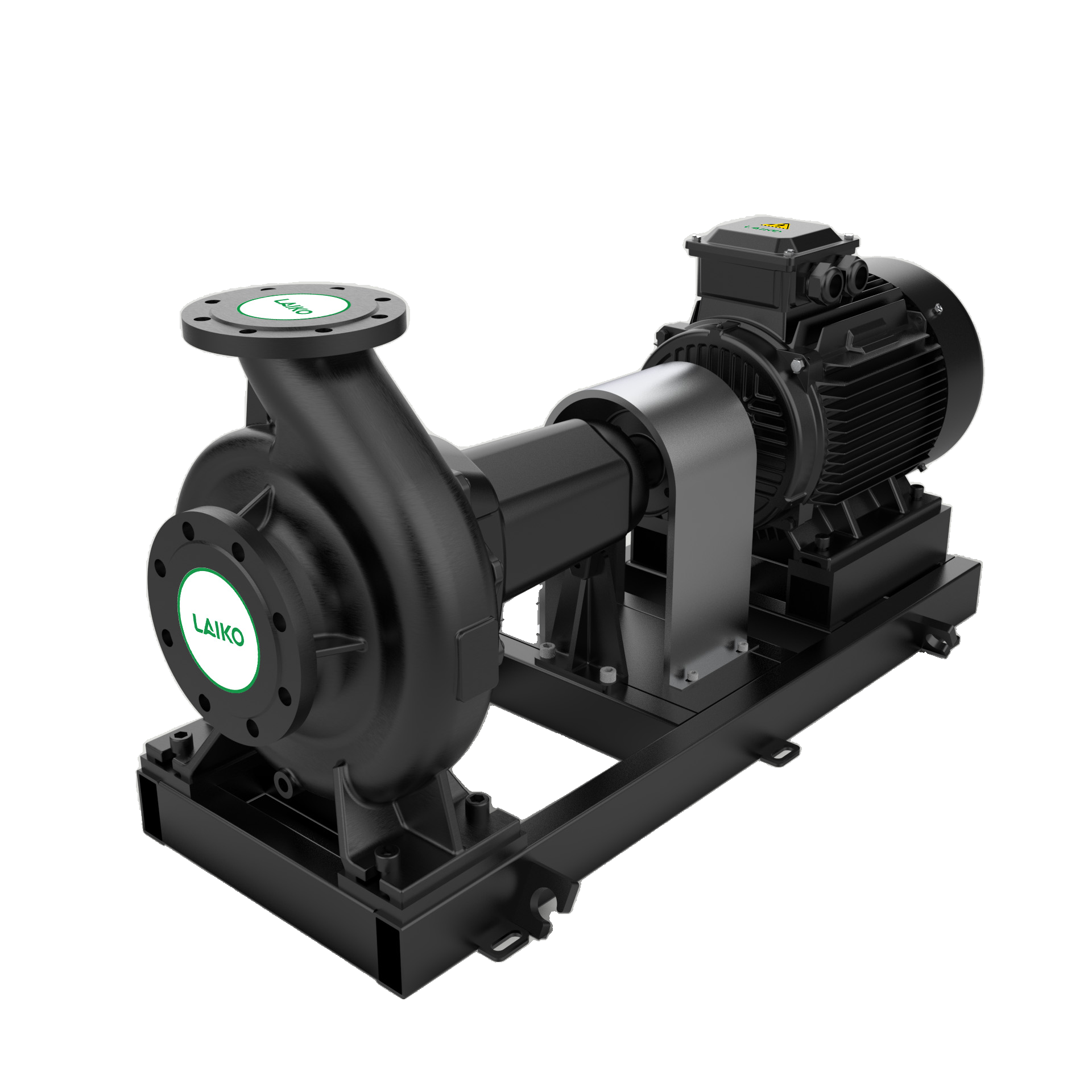
Understanding this equipment begins with looking at its core anatomy. We can divide these pumps into two distinct mechanical groups. The first part is the fluid-handling casing, commonly known as the volute. The second part is the rotating assembly. This assembly includes the impeller, shaft, bearings, and motor. In a traditional pump, these two sections are tightly integrated. You cannot service one without disturbing the other.
A back pull-out design fundamentally separates these two halves. Engineers designed the volute to remain permanently bolted to your facility's pipework. When internal components fail, mechanics only remove the rotating assembly from the rear. They slide the entire back-end out as a single cartridge. You leave the heavy fluid casing untouched. This brilliant separation streamlines every aspect of routine maintenance.
The Role of the Spacer Coupling
The system relies entirely on a specialized component called the spacer coupling. This part sits between the pump shaft and the motor shaft. It creates a deliberate, engineered gap. You might wonder why a gap is necessary. Without it, you would have to unbolt and move the heavy motor to pull the rotating assembly out.
When mechanics need to service the impeller, they simply remove this spacer piece. Removing it opens up enough physical clearance to slide the bearing housing and impeller backward. The motor stays bolted perfectly to the baseplate. You do not lose your precise motor alignment. The spacer coupling essentially acts as a mechanical bridge. It transfers power during operation but disappears when you need access.
Integration in Standard Systems
You will find this architecture deeply embedded in modern industrial standards. It serves as the baseline for robust horizontal single-stage end-suction pumps worldwide. Facilities use them heavily across process plants, commercial HVAC networks, and municipal water treatment centers. Plant engineers prefer them because they standardize maintenance protocols. If your operators learn how to pull one rotating assembly, they can essentially service your entire plant floor.
Uptime and Reliability: The Business Case for the Design
Industrial profitability relies entirely on keeping systems running. Every hour a pump sits offline costs money. This design tackles downtime directly by targeting the most time-consuming steps of equipment repair.
Labor and Downtime Reduction
Let us quantify this specific maintenance advantage. Imagine a mechanical seal fails on a standard unit. First, you call a pipefitter to unbolt the suction and discharge flanges. Next, you bring in a mechanic to pull the pump apart. Finally, you need a rigging team to move the heavy components. It easily turns into a two-day operation.
Now consider the back pull-out approach. Your on-duty mechanic isolates the valves. They remove the spacer coupling and unbolt the bearing bracket. They slide the rotating assembly out, replace the seal on a workbench, and slide it back in. No pipefitters are required. No heavy rigging is needed. You can often finish the entire job in under four hours. This represents a massive reduction in MTTR.
Piping Strain Mitigation
Repeated maintenance introduces severe engineering risks. Heavy industrial piping holds a tremendous amount of stored energy. When you unbolt standard flanges, the pipes often shift. They spring out of alignment. Getting them perfectly aligned again requires extreme physical force.
Forcing misaligned pipes back onto a pump volute creates piping strain. This strain transfers directly to the pump casing. It distorts the metal, prematurely destroys bearings, and ruins mechanical seals. The back pull-out strategy mitigates this risk entirely. Because mechanics never detach the flanges, the piping remains perfectly static. You preserve the original installation integrity.
Motor and Alignment Stability
Precision alignment is critical for rotating equipment. Standard repairs force you to move the motor, requiring a tedious laser alignment process afterward. In a properly configured direct-coupled end-suction pump, this changes entirely.
Because the spacer coupling provides the necessary extraction clearance, the motor remains bolted rigidly to the baseplate. You never touch the motor hold-down bolts. When you reinstall the rotating assembly, the original alignment is largely preserved. Mechanics only need to perform a quick verification check rather than starting from scratch. This translates to faster recommissioning times.
Evaluating Back Pull-Out vs. Alternative Configurations
Engineers must choose the right tool for specific facility constraints. We must compare this architecture against other common industry configurations to understand where it truly excels.
Standard Close-Coupled Pumps vs. Back Pull-Out
Close-coupled units mount the pump impeller directly onto the motor shaft. They share a single casing.
Close-Coupled Strengths: They offer a highly compact footprint. They cost significantly less upfront because they do not require a separate bearing frame or baseplate.
Close-Coupled Weaknesses: To change a simple seal, you must disconnect the piping. You also have to remove the entire motor. If the motor fails, the pump is useless.
Back Pull-Out Advantages: They demand a larger physical footprint. However, they drastically lower long-term labor costs. You separate the fluid risks from the electrical motor. They excel in environments demanding frequent inspections.
End-Suction vs. Double Suction (Split Case)
Double suction pumps, often called split case pumps, feature a casing that splits horizontally in the middle. You remove the top half to access the internal rotor.
Split case models are fantastic for massive flow rates. However, they are expensive and complex to seal. Re-sealing a horizontal split casing requires careful gasket placement to prevent leaks. Conversely, the end-suction design is much simpler. It uses a single circular gasket. For lower flow and higher head applications, the back pull-out model provides a vastly superior maintenance profile at a fraction of the initial purchase price.
Configuration Comparison Chart
Pump Design Type | Initial Upfront Cost | Maintenance Labor Required | Footprint / Space Needs | Piping Disconnection Risk |
|---|---|---|---|---|
Standard Close-Coupled | Low | High (Multi-trade required) | Very Small | High (Must break flanges) |
Split Case (Double Suction) | Very High | Medium (Top casing removal) | Large | Low (Piping stays intact) |
Back Pull-Out End Suction | Medium | Very Low (Single mechanic) | Medium to Large | Zero (Flanges remain bolted) |
Selection Criteria and Sizing Considerations
Choosing the correct equipment goes beyond basic flow and head calculations. You must evaluate the physical constraints of your facility.
Defining Success Criteria
Before purchasing, audit your plant floor. Do you actually have the physical space for this setup? These units require a rigid baseplate. More importantly, they require a spacer coupling. This coupling adds length to the entire package. If you are retrofitting a tight mechanical room, you must measure carefully. The success of this installation depends entirely on allocating enough space for the equipment to function properly.
Material and Compliance Standards
Matching the metallurgy to your fluid is non-negotiable. Standard water systems operate fine on cast iron. Aggressive chemicals require 316 stainless steel. Highly corrosive offshore environments demand duplex or super-duplex alloys.
You must also ensure alignment with regional dimensional standards. In North America, look for ANSI/ASME B73.1 compliance. In Europe and Asia, ISO 2858 is the dominant standard. Standardized pumps guarantee that dimensional footprints remain identical across different manufacturers. You can easily swap an old ISO pump for a new one without modifying your concrete foundation.
Evaluating the Centrifugal Pump Range
Top-tier manufacturers structure their catalogs around modularity. When you evaluate a vendor's centrifugal pump range, look closely at their bearing brackets.
A smart design utilizes one standard bearing bracket for multiple casing sizes. Why does this matter? It radically reduces your spare parts inventory. If you have ten different pumps using the exact same rotating assembly, you only need to keep one spare cartridge on the shelf. This modularity empowers your maintenance team to swap out entire rotating elements in minutes, reducing facility-wide downtime.
Implementation Risks and Rollout Lessons
Even the best engineering designs fail if poorly implemented. We see facilities make consistent mistakes during installation. Avoid these common traps to protect your investment.
The "No-Spacer" Trap
This is the most common purchasing mistake. Buyers order a nominal unit but fail to explicitly specify a spacer coupling. The vendor ships it with a standard close-coupled bridging piece to save money.
What happens next? When maintenance day arrives, mechanics realize there is no gap to pull the impeller through. They are forced to unbolt and move the heavy motor anyway. The entire maintenance advantage evaporates instantly. Always explicitly mandate a properly sized spacer coupling on your purchase orders.
Baseplate Rigidity
Reliability depends entirely on your foundation. When you slide the rotating assembly back, all that heavy cantilevered metal hangs suspended in the air.
You must mount the equipment on a highly rigid, structural steel or cast-iron baseplate.
You must properly level the baseplate using shims.
You must fill the hollow baseplate with non-shrink epoxy grout.
Cementitious grout often cracks under high vibration. Epoxy grout locks the baseplate to the concrete pad. This prevents resonance, dampens operational vibration, and securely supports the cantilevered weight during the pull-out process.
Clearance Requirements Chart
Equipment Component | Clearance Check Required | Reasoning |
|---|---|---|
Rear Shaft End | Length of the rotating assembly + 6 inches | Ensures mechanics can fully extract the shaft without hitting walls. |
Vertical Space | Overhead crane or hoist access | Heavy bearing frames often require lifting straps for safe removal. |
Spacer Coupling | Equal to or greater than the impeller width | Guarantees the impeller can clear the volute casing safely. |
Remind your specifiers to calculate the physical pull-out clearance required behind the pump during the early plant layout phase. Finding out a wall is blocking your shaft extraction after pouring the concrete is a costly nightmare.
Conclusion
A back-pull-out end-suction pump represents far more than just a hydraulic selection. It acts as a strategic facility maintenance decision. By consciously uncoupling the fluid handling casing from the internal moving parts, you drastically reduce repair times and protect expensive piping infrastructure.
When shortlisting equipment, we highly recommend prioritizing this architecture for continuous-process applications. It is absolutely essential for handling toxic or hazardous fluids, where breaking pipe flanges introduces severe safety risks. Facilities focused on minimizing long-term operational labor over slightly lower upfront costs will see the highest returns on this investment.
Here are your immediate next steps:
Audit Existing Equipment: Track your current MTTR on existing standard pumps to identify your biggest labor drains.
Request Documentation: Ask shortlisted manufacturers for detailed flow-head curves alongside modularity charts.
Verify Dimensions: Review dimensional drawings carefully to ensure you have the correct rear extraction clearance in your facility layout.
Mandate Spacers: Update your procurement templates to specifically require spacer couplings on all future orders.
FAQ
Q: What is the main advantage of a back pull-out centrifugal pump?
A: The primary advantage is superior maintenance efficiency. Operators can easily service the rotating assembly, bearings, and mechanical seal without ever disturbing the primary pipework or the main volute casing.
Q: Do I need special tools to maintain a back pull-out pump?
A: No. You only need standard mechanical hand tools. The design specifically eliminates the need for heavy pipe rigging equipment or specialized flange spreaders during routine internal maintenance.
Q: Does a back pull-out design affect the pump's suction lift capabilities?
A: No, it does not. The structural maintenance design does not inherently change the hydraulic physics. The NPSHr and suction lift limitations remain completely identical to standard models utilizing the same volute and impeller geometry.
Q: Can a close-coupled pump feature a back pull-out design?
A: True functionality requires a separately mounted motor and a dedicated spacer coupling. Standard close-coupled architectures mount the impeller directly on the motor shaft, which fundamentally excludes them from genuine back pull-out capabilities.


