


Energy-Saving Vertical Multistage Pumps for Building Water Supply and RO Treatment
Views: 0 Author: Site Editor Publish Time: 2026-08-27 Origin: Site


Pumping systems consume a massive portion of energy in commercial buildings. Industrial water treatment facilities face similar power demands. Operational realities show continuous-duty applications drain budgets quickly. High-rise pressure boosting requires constant mechanical effort. Membrane filtration systems demand relentless flow. In these setups, legacy pumps create hidden operational expenditure (OPEX) drains. You lose money daily through hydraulic inefficiencies.
Facility managers must rethink procurement strategies. Upgrading to Energy-saving vertical multistage pumps shifts your focus. You move away from initial procurement costs. Instead, you prioritize long-term lifecycle cost reduction. These advanced units offer verifiable return on investment. They achieve this through intelligent variable frequency drive (VFD) integration. Optimized hydraulics further reduce mechanical waste. You will learn how these pumps stabilize pressure. We will explore their specific applications. You will also discover strategies to mitigate maintenance risks.
Key Takeaways
Lifecycle Cost Control: Energy consumption dictates up to 85% of a pump's lifetime cost; high-efficiency motors (IE3/IE4) mitigate this expense.
Footprint & Scalability: Vertical inline configurations maximize mechanical room space while allowing modular parallel installations for peak demand.
Targeted Applications: Proven to stabilize pressure in secondary water supply for high-rise residential buildings and meet the rigorous continuous-pressure demands of reverse osmosis water treatment.
Risk Mitigation: Specifying easy-maintenance vertical multistage pumps with cartridge mechanical seals reduces planned downtime and labor costs.
The Business Case for Upgrading to Energy-Saving Vertical Multistage Pumps
Continuous operation amplifies the financial impact of hydraulic inefficiencies. High-flow environments stress older equipment. High-pressure demands push standard pumps past their optimal limits. Old systems run at full speed regardless of actual need. This constant maximum output wastes immense amounts of electricity. Your utility bills reflect this mechanical overexertion. Facility budgets suffer when you ignore these hidden OPEX drains.
Decision-makers must contrast capital expenditure (CAPEX) against operational expenditure (OPEX). You should frame procurement decisions around lifecycle energy savings. Evaluate the projected energy savings per kilowatt-hour. Look at a standard 10-15 year operational lifecycle. The initial purchase price represents a tiny fraction of total spending. Electricity consumption dominates the long-term financial picture. Smart upgrades pay for themselves rapidly through reduced power bills.
Technological Differentiators
Modern pumping systems rely on specific technological advancements. These features separate premium units from outdated designs. They ensure maximum hydraulic transfer.
VFD Integration: Variable Frequency Drives match pump speed to actual demand. They prevent the motor from running constantly at full speed. This reduces immediate electrical loads.
Precision-Welded Impellers: Manufacturers use high-grade stainless steel. Precision welding reduces internal friction loss. The material prevents structural degradation over time.
Premium Efficiency Motors: Systems utilize IE3 or IE4 compliant motors. These advanced motors minimize heat generation. They drastically cut down electrical waste.
Lifecycle Cost Breakdown (10-Year Estimate)
Cost Category | Standard Pump System | Energy-Saving Multistage System |
|---|---|---|
Initial CAPEX | Lower initial cost | Moderate to High initial cost |
Energy (OPEX) | High (Runs at full speed constantly) | Low (VFD adjusts to demand) |
Maintenance (OPEX) | High (Frequent seal/bearing wear) | Low (Reduced mechanical stress) |
10-Year Outlook | Financial drain | Positive ROI generated |
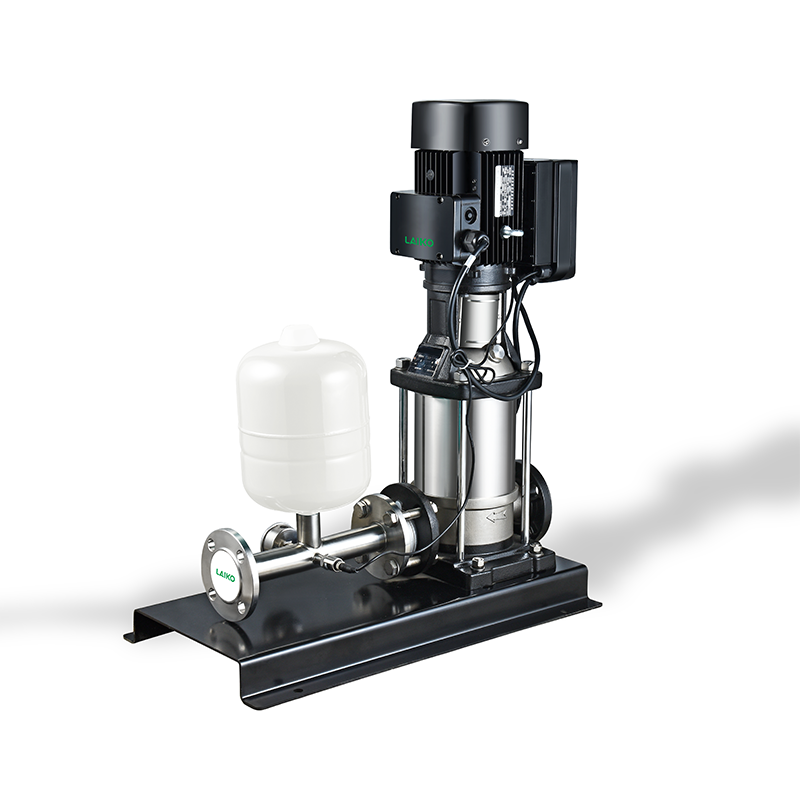
High-Rise Secondary Water Supply: Residential, Office Buildings, and Hotels
High-rise structures experience extreme water demand fluctuations. Morning and evening hours create massive usage peaks. Off-peak hours see demand drop to near zero. Standard pumps struggle to adapt. They either over-pressurize the pipes or fail to deliver enough flow. This inconsistency frustrates tenants. It also places severe stress on building plumbing systems. You need equipment capable of rapid, intelligent adaptation.
Engineers solve this using zoned pressure boosting. They cascade modern pumps in modular booster sets. This setup maintains consistent pressure across multiple building zones. Intelligent controls stage the pumps. They activate additional units only when demand spikes. This prevents pipe-damaging water hammer. You avoid sudden pressure shocks. The strategy proves highly effective in secondary water supply for high-rise residential buildings. Residents enjoy stable shower pressure regardless of the time.
Specific Commercial Requirements
Different commercial environments carry unique operational mandates. You must specify equipment based on the exact building type.
Residential and Hospitality: Acoustic performance is absolutely critical. Tenants and hotel guests demand quiet environments. Premium vertical pumps operate with low vibration. They minimize structure-borne noise.
Commercial Real Estate: Offices require absolute reliability. A water failure halts business operations. Meeting continuous water supply for office buildings and hotels demands N+1 redundancy. You must install backup pumps within the booster set. If one unit fails, the system auto-switches to the standby unit.
Optimizing High-Pressure Reverse Osmosis Water Treatment
Industrial water purification presents severe technical challenges. The system requires sustained, high-pressure feed water. The pumps must force source water through microscopic semi-permeable membranes. Even slight pressure drops cause immediate yield failures. They can also degrade permeate quality. reverse osmosis water treatment leaves no room for hydraulic inconsistency. The feed pumps must deliver unyielding performance.
Vertical multistage designs excel in these demanding environments. They generate steep performance curves. A steep curve maintains high pressure even if the flow rate varies slightly. This stability protects the delicate RO membranes. Material safety is another critical factor. Aggressive, demineralized water corrodes cast iron quickly. Brackish water destroys standard metals. High-grade stainless steel construction (304 or 316L) prevents this corrosion. The pumps remain pristine internally. They do not leach contaminants into the purified water.
Energy Recovery Synergy
Large-scale RO plants consume massive amounts of power. Engineers often pair vertical feed pumps with energy recovery devices (ERDs). The ERD captures kinetic energy from the high-pressure brine reject stream. It transfers this energy back to the feed water. The main multistage pump then works less hard. This synergy drastically lowers the specific energy consumption (SEC) of the entire plant. It transforms an energy-intensive process into a sustainable operation.
Evaluation Criteria: Specifying the Right Pump for Your System
Specifying the correct pump requires careful hydraulic analysis. You must review the hydraulic coverage of the proposed unit. Look at the flow versus head pump curve. Ensure your exact duty point falls squarely within the Best Efficiency Point (BEP) region. Running a pump too far left or right of the BEP causes damage. It induces excessive vibration. It accelerates bearing wear. It plummets overall energy efficiency.
Next, assess the Net Positive Suction Head (NPSH). You must evaluate the inlet suction conditions. Poor suction leads to cavitation. Cavitation forms vapor bubbles inside the impeller. These bubbles collapse violently. The implosions destroy stainless steel over time. Cavitation remains a primary cause of premature failure in high-pressure applications. You must guarantee the available NPSH exceeds the pump's required NPSH.
Maintenance and Downtime Metrics
The "ease of service" factor acts as a critical buyer metric. Complex maintenance routines extend planned downtime. They drive up expensive labor costs. This is why specifying easy-maintenance vertical multistage pumps protects your operational budget. Look for specific mechanical features.
Cartridge Mechanical Seals: These allow technicians to replace seals rapidly. You do not need to disassemble the motor. You do not need to disconnect the piping.
Spacer Couplings: They provide easy access to the seal area. Maintenance drops from hours to mere minutes.
System Integration Protocols
Modern buildings rely on centralized intelligence. Your pumps must communicate with the Building Management System (BMS). Specify units compatible with standard communication protocols. Modbus and BACnet are industry standards. They allow facilities to conduct real-time energy monitoring. You can track power draw, flow rates, and fault alerts remotely.
Best Practices and Common Mistakes
Best Practice: Always size the pump for the actual operational load. Use historical flow data. Do not rely solely on theoretical maximums.
Common Mistake: Ignoring water quality reports. Using standard 304 stainless steel on high-chloride brackish water will cause rapid pitting corrosion. Always upgrade to 316L or duplex steel for aggressive fluids.
Implementation Realities, Risks, and Shortlisting Logic
Upgrading mechanical rooms introduces specific retrofit challenges. You often replace older, bulky horizontal pumps. The new vertical units have a smaller footprint. However, you must address pipe alignment carefully. Flange compatibility between old headers and new pumps requires attention. Sometimes you need custom transition spools. Structural basepad requirements also change. Vertical pumps exert different dynamic loads on the concrete floor. Ensure the existing basepad can handle the concentrated weight and vibration.
Electrical integration poses another hurdle. Adding multiple VFD-driven pumps impacts the building's electrical grid. VFDs create harmonic distortion. This distortion can interfere with sensitive electronic equipment elsewhere in the building. We recommend a transparent look at your electrical infrastructure. You may need to install harmonic filters. These filters clean the electrical noise. They protect both the building grid and the pump electronics.
Next-Step Action Plan for Procurement
Move forward systematically to ensure a successful upgrade.
Audit current system data: Gather your existing flow and head data. Pull recent energy logs to establish a baseline.
Request vendor LCC calculations: Ask manufacturers for lifecycle cost projections. Ensure they use your specific local utility rates for accuracy.
Verify regional SLAs: Check the vendor's service level agreements. Confirm that spare parts and cartridge seals remain readily available in your geographic region.
Conclusion
Selecting modern vertical multistage pumps represents a strategic facility decision. It goes far beyond a simple hardware upgrade. You balance vital operational reliability with aggressive energy conservation. Legacy units drain OPEX through hydraulic inefficiency and constant full-speed operation. Advanced units utilize VFDs and precision impellers to cut electricity waste. They handle extreme pressure demands in high-rises and membrane filtration seamlessly.
We recommend prioritizing manufacturers who supply fully transparent pump curves. Look for modular designs featuring cartridge mechanical seals. Verify their efficiency certifications before purchasing. Tailor your selection to your specific residential, commercial, or industrial application.
Consult a qualified hydraulic engineering specialist today. Have them run a comprehensive system curve analysis on your facility. Identify the exact multistage configuration needed for your next major retrofit project.
FAQ
Q: What makes a vertical multistage pump "energy-saving" compared to standard pumps?
A: The savings stem from premium efficiency motors (IE3/IE5) and seamless VFD compatibility. The VFD matches pump output to real-time demand, stopping full-speed waste. Additionally, optimized hydraulic designs use smooth stainless steel impellers. This reduces internal friction, allowing the pump to move more water using less electrical power.
Q: Can these pumps handle brackish water in reverse osmosis systems?
A: Yes, provided you specify the correct material grade. Standard freshwater systems use SS304. However, brackish water contains high chlorides. You must upgrade to SS316L or duplex stainless steel for higher salinity. This critical material change prevents rapid pitting corrosion and structural failure.
Q: How often do easy-maintenance vertical multistage pumps require servicing?
A: We recommend bi-annual routine visual and acoustic checks. Actual mechanical servicing is rare if operated within the BEP. When maintenance is needed, cartridge seals reduce replacement time. Technicians can swap the seal in under 30 minutes without removing the heavy motor or pipework.
Q: Are vertical multistage pumps better than horizontal pumps for high-rise buildings?
A: Yes, they are vastly superior for pressure boosting. They offer a significantly smaller footprint, saving premium mechanical room space. They operate with much lower vibration. Most importantly, their stacked impeller design easily generates the extreme head pressures required to push water up dozens of stories.


