


How to Select Commercial Water Pumps for Hospitals
Views: 0 Author: Site Editor Publish Time: 2026-10-05 Origin: Site


Water supply in healthcare is not just a standard utility. You must treat it as critical life-safety infrastructure. A sudden pressure drop or contamination event halts surgeries instantly. It impacts dialysis treatments and severely risks patient safety. Upgrading or specifying pumps for these facilities requires moving beyond basic flow and head calculations. You must prioritize strict N+1 redundancy, stringent hygiene standards, and variable demand management. Success depends entirely on achieving absolute, continuous reliability. Hospital administrators and facility engineers face immense pressure daily. They must balance aging mechanical room infrastructure against evolving clinical standards. This guide provides a straightforward, engineering-aligned framework for evaluating your options. We help you shortlist equipment designed for the zero-downtime realities of modern hospitals. You will learn how to align system architectures, ensure strict compliance, and manage extreme demand fluctuations seamlessly.
Key Takeaways
Redundancy is mandatory: Hospital systems require multi-pump configurations (duplex, triplex, or quad) with alternating lead/lag logic to ensure zero downtime.
Material selection dictates compliance: Stainless steel construction is non-negotiable for potable water applications to prevent corrosion and bacterial growth.
Variable demand requires intelligent controls: Integrating a constant-pressure water supply system with Variable Frequency Drives (VFDs) ensures stable performance across extreme demand shifts while reducing lifecycle energy costs.
System alignment matters: Distinct applications (HVAC cooling vs. domestic booster) require specific pump architectures to maximize efficiency and footprint.
Defining the Operational Demands of Healthcare Facilities
Hospitals operate under an unforgiving set of rules and regulations. We must define operational success by uncompromised, continuous reliability. Medical teams rely heavily on commercial water pumps to deliver exact flows continuously. If a pump fails unexpectedly, central sterile processing departments must shut down their autoclaves immediately. Isolation wards simultaneously lose critical HVAC environmental controls. These unexpected failures disrupt vital clinical care rapidly. They also expose healthcare facilities to massive legal and regulatory liabilities. The stakes remain too high for standard commercial equipment.
Water demand inside a typical hospital peaks drastically and unpredictably. Shift changes, morning hygiene routines, and cafeteria operations create massive volume spikes. Your pumping systems must seamlessly scale their output instantly. They need to handle extreme volume shifts without causing dangerous pressure spikes. They must also prevent destructive water hammer effects. Sudden hydraulic shocks severely damage fragile hospital piping networks. These shockwaves can also disrupt delicate medical devices connected directly to the plumbing. Smooth, controlled acceleration of water flow protects the entire infrastructure.
Evaluating equipment requires looking at long-term energy consumption carefully. Hospital pumps run 24 hours a day under extremely harsh conditions. Long-term energy efficiency and routine maintenance intervals dominate your daily budget. We recommend prioritizing high-efficiency motors equipped alongside intelligent controls. They lower your long-term electrical consumption significantly across the facility. Routine maintenance procedures must remain simple, safe, and highly predictable. Overlooking long-term electrical consumption ruins facility budgets quickly. You must demand efficiency data for every potential duty point.
Categorizing Commercial Water Pumps by Hospital Application
Different hospital zones need highly specific pump architectures to function correctly. You cannot use a generalized, one-size-fits-all approach for healthcare plumbing. We must match the hydraulic profile perfectly to the exact application. Misaligned equipment causes premature mechanical failure and compromises patient care.
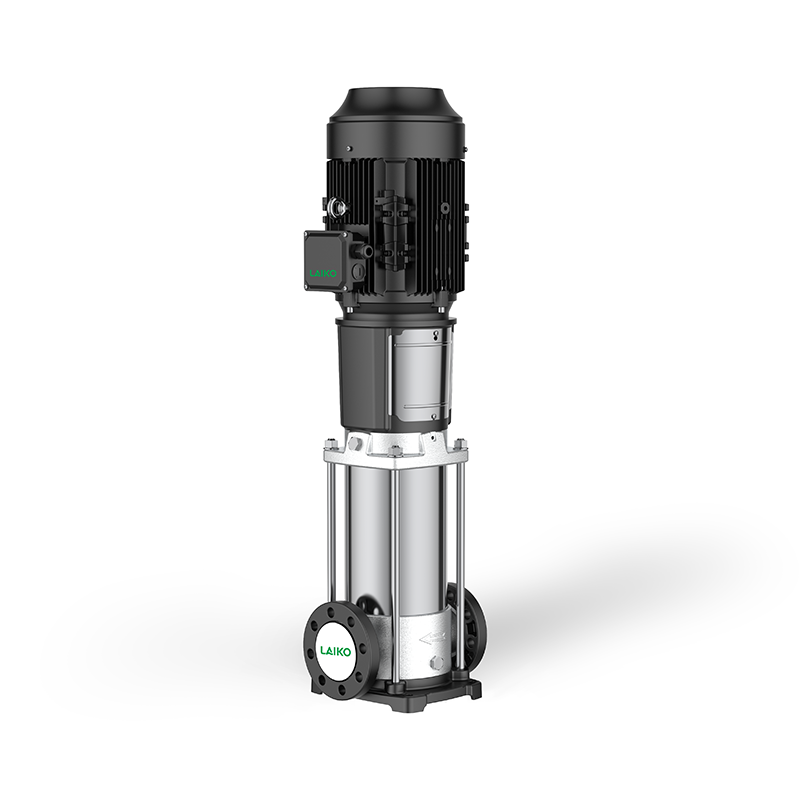
For potable water and domestic booster systems, space and sanitation are critical. Hospital mechanical rooms often lack extra, usable floor space. High-rise hospital towers also demand extreme head pressures to reach upper floors. A stainless steel vertical multistage pump fits perfectly here. It features a remarkably small footprint compared to traditional designs. The stacked vertical impeller design generates the intense high head needed. Furthermore, highly corrosion-resistant wetted parts maintain strict water purity constantly. They prevent rust particles from entering the drinking water supply.
HVAC, chilled water, and hydronic heating systems face entirely different physical challenges. These closed-loop systems move massive volumes of water constantly. They also experience incredibly wide temperature variances throughout daily operations. In these harsh environments, a horizontal stainless steel centrifugal pump excels continuously. It delivers exceptionally high flow rates highly efficiently. The innovative back-pull-out design allows facility technicians to perform maintenance quickly. You can service the internal impeller without disconnecting the heavy volute casing. You leave the main pipework completely undisturbed during routine bearing replacements.
Wastewater and structural sump applications require heavy-duty, uncompromising resilience. Hospitals produce dangerous biological waste and experience heavy facility surface runoff. You need specialized submersible pumps designed strictly for these hazardous zones. They must feature robust, clog-resistant impellers to handle solid debris reliably. They protect lower facility levels, like morgues and basements, from dangerous flooding events. These units also require specialized dual mechanical seals to prevent motor flooding.
Core Evaluation Dimensions for Specification
Precision engineering separates standard building utilities from true hospital-grade infrastructure. We must evaluate several core technical dimensions before specifying any equipment. Facility managers should never rely on outdated specification templates for modern hospitals.
Pressure stability across the campus is absolutely non-negotiable. Medical equipment and advanced sterilization units demand exact, unwavering pressures. Pipe stress resulting from sudden pressure spikes causes catastrophic hidden leaks. You must implement a modern constant-pressure water supply system. These advanced configurations use Variable Frequency Drives (VFDs) and logic controllers. They adjust individual motor speeds instantly based on real-time pressure sensor feedback. This logic ensures clinical equipment always receives the exact required pressures. It also prevents the motors from running at full speed unnecessarily.
Next, consider your mechanical redundancy configurations very carefully. Hospital systems utilize specialized skid-mounted duplex, triplex, or quad arrays. You must specify strict N+1 redundancy for all critical loops. You need enough pumps to meet peak demand calculations perfectly (N). You also need one fully capable, identical backup pump standing by (+1). Lead/lag alternation logic is extremely crucial for these multi-pump skids. Systems automatically rotate the primary active pump every few hours. This ensures perfectly even wear across all installed motors and seals. If the lead pump fails unexpectedly, the standby unit engages immediately.
Hydraulic efficiency determines the long-term viability of the installation. You must ensure pumps operate near their Best Efficiency Point (BEP). Undersized units burn out prematurely from continuous overwork and heat. Oversized units cause severe internal cavitation and destroy their own impellers. They also waste massive amounts of electrical energy every single day.
Best Practices for Specification:
Map extreme peak demands accurately before sizing the pump impellers.
Specify VFDs for any continuous-duty motor exceeding 5 horsepower.
Require factory-tested skid packages to guarantee hydraulic performance upon arrival.
Verify Net Positive Suction Head (NPSH) margins to prevent cavitation.
Compliance, Hygiene, and Implementation Risks
Hospitals face incredibly strict regulatory scrutiny regarding internal water quality. Infection control standards dictate your mechanical material choices heavily. Cast iron components rust gradually over time when exposed to oxygenated water. This persistent corrosion creates microscopic environments ideal for dangerous biofilm buildup. Legionella bacteria thrive inside these exact, unprotected rusty crevices. You must specify NSF/ANSI 61 and 372 certified materials strictly. Lead-free, high-grade stainless steel remains an absolute requirement for domestic water. Furthermore, engineers must design the piping system to eliminate stagnant water zones. These zones breed dangerous bacteria rapidly at room temperatures.
Noise and vibration mitigation also require extremely careful planning. Mechanical rooms often sit directly adjacent to sensitive patient care areas. Sometimes they sit directly above sterile surgical suites. Loud humming or structural vibrations disrupt patient recovery significantly. They also distract surgeons performing delicate procedures nearby. Evaluate your potential selections based on verified low decibel ratings. Demand dynamically balanced pump rotors from your chosen manufacturers. Always mandate the installation of heavy concrete inertia bases. Use high-deflection vibration isolators to break structural sound transmission paths.
Rollout logistics and final commissioning introduce significant facility risks. You cannot simply shut down hospital water supplies during the installation process. You must maintain continuous service to critical care wards.
Common Mistakes During Rollout:
Ignoring integration protocols for existing Building Management Systems (BMS).
Failing to plan a detailed, phased commissioning sequence carefully.
Overlooking bypass valve requirements needed during future maintenance windows.
Skipping laser alignment procedures on base-mounted centrifugal pumps.
Integration into existing BMS networks via BACnet or Modbus is mandatory. It allows operators to monitor real-time flow and fault alarms remotely. Phased commissioning strategies successfully avoid dangerous facility-wide water shutdowns. They ensure perfectly seamless transitions between aging infrastructure and new systems.
Shortlisting Logic and Next-Step Actions
Procuring hospital-grade equipment requires a rigorous, evidence-based vendor vetting process. Look exclusively for manufacturers possessing heavily documented healthcare deployment experience. Standard commercial vendors often misunderstand clinical reliability standards entirely. Evaluate their local service and support networks thoroughly before signing contracts. You need guaranteed, immediate availability of original OEM replacement parts. Ensure they offer true 24/7 emergency technician dispatch capabilities. These technicians must reside within your facility's immediate geographic radius.
System specifiers must gather precise baseline data before reaching out. First, conduct a comprehensive, modern fixture unit analysis. Audit all existing peak GPM (gallons per minute) historical trends. Record exact PSI (pounds per square inch) data from existing gauges. Finally, map out the exact physical spatial constraints inside your mechanical room. Doorway widths often dictate which pump skids you can actually install.
When requesting a formal proposal, demand absolute technical transparency. Ask vendors to provide guaranteed efficiency curves across multiple realistic duty points. Request highly detailed, standardized preventative maintenance schedules. Review the warranty terms very carefully for both the pump end and the motor assembly.
Hospital Pump Specification Comparison
Application Zone | Recommended Pump Type | Key Requirement | Primary Benefit |
|---|---|---|---|
Domestic Water Booster | Vertical Multistage | NSF/ANSI 61 Stainless Steel | High pressure, zero contamination risk |
HVAC / Central Chillers | Horizontal Centrifugal | High Volume Flow Capacity | Rapid facility climate stabilization |
Medical Sterilization | Constant-Pressure System | Integrated VFD Controllers | Eliminates dangerous pressure drops |
Biological Wastewater | Submersible Sump | Heavy-Duty Clog-Resistant Impeller | Prevents biological basement flooding |
Conclusion
Selecting commercial water pumps for hospitals is fundamentally a risk-management decision. It requires balancing strict engineering principles against critical life-safety requirements daily. Standard commercial equipment simply cannot handle the extreme demands of clinical environments. Facilities must prioritize high-grade stainless steel construction to maintain absolute hygiene. Intelligent constant-pressure controls prevent damaging pipe shocks and protect clinical workflows. Strict N+1 redundancy guarantees continuous operation even during unexpected mechanical failures. We strongly encourage hospital facility managers to consult specialized pump engineers immediately. Audit your current baseline flow metrics and structural constraints thoroughly today. Take these essential diagnostic steps before issuing any formal requests for proposals. Upgrading your infrastructure properly secures your facility for decades to come.
FAQ
Q: Why is a constant-pressure water supply system critical for hospitals?
A: Medical equipment, sterilization units, and upper-floor wards require exact, unwavering pressure to function safely. Constant-pressure systems use VFDs to instantly adapt to varying water demands, eliminating disruptive pressure drops.
Q: What is the difference between a vertical multistage and a horizontal centrifugal pump?
A: Vertical multistage pumps stack impellers vertically, saving floor space while generating high pressure (ideal for boosting domestic water up high-rises). Horizontal centrifugal pumps take up more floor space but excel at moving massive volumes of water (ideal for hospital HVAC and cooling towers).
Q: How does N+1 redundancy work in hospital pump skids?
A: N+1 means having the necessary number of pumps to meet peak demand (N), plus one fully capable backup (+1). If a working pump fails, the system automatically switches to the backup without a drop in facility water supply.
Q: Why specify stainless steel for healthcare water systems?
A: Cast iron can rust, leading to particulate contamination and creating environments where bacteria (like Legionella) can harbor. Stainless steel (304 or 316) is highly corrosion-resistant, ensuring sanitary potable water delivery and meeting strict health codes.


