


Stainless Steel Commercial Water Pumps: Uses and Benefits
Views: 0 Author: Site Editor Publish Time: 2026-09-22 Origin: Site


Commercial fluid handling requires balancing continuous operational uptime against strict compliance and maintenance constraints. Facility managers face immense pressure to keep systems running without disruption. Substandard pump materials often lead to catastrophic failures in these demanding environments. Aging cast iron components rust, scale, and shed particulates into the fluid stream. This degradation causes unplanned downtime, severe fluid contamination, and accelerated wear in harsh environments. You simply cannot afford these operational risks. Enter stainless steel commercial water pumps. They stand as the industry standard for high-stakes, aggressive, or sanitary fluid transfer applications. They deliver unmatched reliability where lesser metals quickly fail. By upgrading to stainless steel, you secure long-term operational continuity. You protect downstream equipment. You ensure pristine fluid quality from start to finish. This article explores the concrete benefits, industrial applications, and configuration strategies you need to optimize your facility's fluid handling systems.
Key Takeaways
Stainless steel provides superior corrosion resistance, thermal stability, and hygiene compliance compared to traditional cast iron alternatives.
Selecting between 304 and 316 stainless steel grades depends strictly on the fluid’s chemical aggressiveness and chloride content.
Pump configuration—whether vertical multistage or horizontal single-stage—must align directly with facility footprint, flow rate (GPM), and dynamic head pressure requirements.
Real-world longevity relies as much on proper mechanical seal specification as it does on the stainless steel housing.
The Business Case: Cast Iron vs. Stainless Steel Pumps
Cast iron has dominated industrial pumping for decades. However, it harbors a fatal flaw. It rusts continuously when exposed to untreated water. Aging cast iron introduces severe risks to modern fluid systems. Rust and scaling flake off over time. They shed abrasive particulates directly into your fluid stream. This shedding ruins product purity. It also destroys sensitive downstream equipment like filters, spray nozzles, and mechanical valves. You must mitigate these risks proactively.
Stainless steel commercial water pumps eliminate this particulate shedding entirely. They offer drastically extended mean time between failures (MTBF). You spend far less time replacing worn components. Your maintenance teams can focus on preventative work rather than reactive emergencies. This extended MTBF guarantees better operational continuity for the entire plant.
Compliance is another major factor driving this transition. Regulatory agencies demand flawless hygiene across many sectors. Standard materials simply cannot meet these stringent rules. Stainless steel fulfills strict requirements easily. For example, it meets NSF/ANSI 61 standards for potable water distribution. It also satisfies rigid FDA mandates for sanitary processing. Facilities guarantee safety and pass audits seamlessly when they upgrade their infrastructure.
Core Performance Benefits of Stainless Steel
The fundamental advantages of stainless steel stem from its unique metallurgy. These performance benefits make it indispensable for critical infrastructure.
Chemical and Corrosion Resistance
Stainless steel relies on a microscopic superpower. It forms a passive oxidation layer. This chromium-rich layer blocks rust entirely. It protects the underlying metal against acidic, alkaline, and lightly viscous commercial fluids. You usually choose between two main grades. General-use 304 stainless steel handles mostly neutral water systems perfectly. Marine-grade 316 stainless steel contains added molybdenum. Molybdenum resists high-chloride environments and aggressive chemical mixtures.
Extreme Thermal Tolerance
Industrial processes often involve extreme heat. Standard pumps warp or lose tensile strength under these conditions. Stainless steel maintains absolute structural integrity. It resists warping during high-temperature fluid transfers. Food and pharmaceutical plants rely heavily on CIP/SIP washdowns. Clean-In-Place (CIP) and Sterilization-In-Place (SIP) systems use boiling, caustic chemicals. Stainless steel survives these violent temperature swings effortlessly.
Sanitary Surface Properties
Zero-contamination environments demand polished surfaces. Polished stainless steel is entirely non-porous. It eliminates microscopic bacterial harboring zones completely. Biofilms and scaling cannot stick to its smooth interior walls. This characteristic ensures complete hygiene during operation. You protect your batches from microbial blooms.
Industrial Uses and Application Environments
Different industries leverage these robust pumps differently. We see specific, highly regulated applications across major global sectors.
Food, Beverage, and Brewing
Taste is everything in food production. Breweries use them for sanitary wort pumping. Dairy processors transfer raw milk and heavy creams rapidly. They must protect the delicate flavor profile. Bacteria elimination remains non-negotiable. Stainless steel prevents any metallic leaching into the product. It ensures every batch tastes exactly as intended.
Pharmaceutical and Medical Facilities
Purity equals safety in healthcare. Medical facilities generate high-purity water continuously. They build extensive Reverse Osmosis (RO) and Deionized (DI) water systems. Sterile chemical compounding requires absolute cleanliness. Any stray metallic ion can ruin an entire medical batch. Stainless steel prevents this contamination completely.
HVAC and Commercial Water Treatment
These sectors move massive volumes of treated water daily. Applications include towering cooling loops and high-pressure boiler feed systems. Commercial desalination also tests equipment limits severely. Continuous exposure to chemically treated water degrades lesser metals quickly. Stainless steel handles the aggressive biocides and anti-scaling agents safely.
Follow these standard practices when operating in regulated environments:
Always verify the fluid's exact chloride concentration before specifying a metallurgical grade.
Inspect internal electropolish requirements for food-grade compliance mandates.
Match the pump housing material to the existing piping network to prevent galvanic corrosion.
Schedule routine visual inspections for early signs of cavitation wear around the impeller.
Evaluating Pump Configurations for Your Facility
You must align pump geometry to your exact facility constraints. Consider available floor space, flow rate (GPM), and dynamic head pressure carefully. We break down the three primary configurations below.
Vertical Multistage Centrifugal Pump
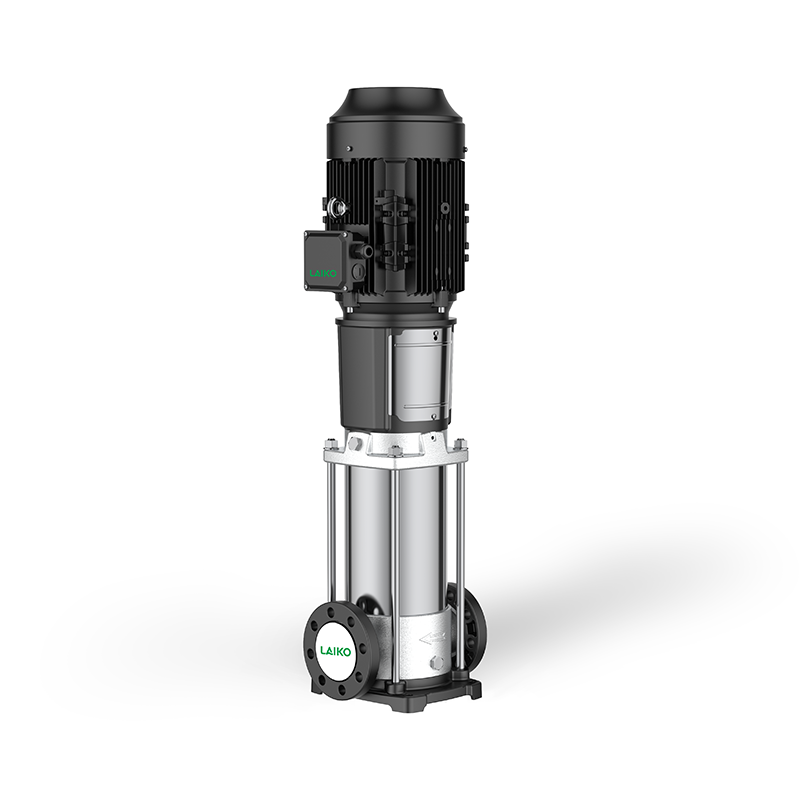
High-pressure applications often lack adequate floor space. You need a powerful yet compact solution. A vertical multistage centrifugal pump solves this architectural problem beautifully. It stacks multiple impellers vertically on a single shaft. This design generates massive head pressure without widening the machine's footprint. It utilizes vertical airspace instead of valuable floor real estate.
Best for: High-pressure, low-flow applications occupying limited floor space.
Use cases: High-rise commercial building water boosting. Boiler feed systems. Industrial RO water filtration plants.
Horizontal Stainless Steel Single-Stage Centrifugal Pump
Sometimes you just need to move huge volumes quickly. A horizontal stainless steel single-stage centrifugal pump excels here. It provides tremendous high-volume flow rates at lower discharge pressures. The horizontal layout remains exceptionally easy to access. Maintenance teams can often remove the impeller without disturbing the surrounding piping.
Best for: High-volume flow rates at lower discharge pressures.
Use cases: General liquid transfer. Cooling water circulation loops. Bulk fluid moving in chemical processing facilities.
Horizontal Multistage Stainless Steel Centrifugal Pump
You might need a balanced hybrid approach. You want steady pressure but also demand long operational hours. A horizontal multistage stainless steel centrifugal pump handles these demands perfectly. It delivers reliable pressure boosting during continuous, heavy-duty cycles. The horizontal stance provides excellent stability for multi-impeller designs.
Best for: A balance of steady pressure boosting and continuous duty over long operational hours.
Use cases: Commercial irrigation networks. Light industrial washdown systems. Municipal water distribution sectors.
Pump Configuration Comparison Chart
Pump Configuration | Primary Strength | Footprint | Ideal Flow/Pressure Ratio |
|---|---|---|---|
Vertical Multistage | Maximum Pressure Generation | Compact / Vertical | Low Flow / High Head |
Horizontal Single-Stage | Maximum Volume Transfer | Wide / Horizontal | High Flow / Low Head |
Horizontal Multistage | Balanced Duty Cycles | Wide / Horizontal | Moderate Flow / Moderate Head |
Implementation Risks and Shortlisting Criteria
Buying the right housing is only step one. Poor implementation ruins good equipment rapidly. You must anticipate mechanical and hydraulic challenges during installation.
The Mechanical Seal Trap
A premium stainless steel body means nothing if the seals fail. The mechanical seal represents the pump's weakest link. You must match the seal materials to the fluid. Silicon Carbide (SiC) handles abrasives remarkably well. EPDM works beautifully for standard water and mild chemicals. Viton (FKM) resists harsh oils and extreme heat. Incorrect seals dissolve, swell, or crack rapidly. This failure causes immediate fluid leaks.
System Sizing and Cavitation Risks
Never oversize your pump intentionally. Oversizing leads directly to dead-heading. It also triggers destructive cavitation. Cavitation creates microscopic vapor bubbles. These bubbles collapse forcefully against the metal. The resulting shockwaves pit and destroy the impeller. You must match the pump's performance curve to your system precisely. Calculate your facility’s exact net positive suction head (NPSH). Ensure the NPSH available always exceeds the NPSH required.
Integration and Rollout
Physical installation requires rigorous precision. Ensure perfect piping alignment during bolting. Misalignment causes severe bearing stress and premature shaft failure. Consider variable frequency drive (VFD) compatibility. VFDs maximize energy efficiency during variable demand. They also provide soft starts, reducing sudden mechanical stress. Finally, install high-quality vibration isolation mounts. They protect both the pump base and the surrounding concrete infrastructure.
Avoid these common implementation mistakes:
Failing to account for fluid temperature spikes during mechanical seal selection.
Bolting piping directly to flanges before properly supporting the heavy pipe weight.
Ignoring the minimum continuous safe flow limits listed on the manufacturer data sheet.
Conclusion
Specifying a stainless steel pump is a calculated defensive investment. It protects your facility against catastrophic downtime. It prevents highly disruptive compliance failures. You secure reliable, clean fluid transfer across your most critical processes. The inherent durability outlasts traditional materials by a massive margin.
Technical buyers must act systematically. Audit your exact fluid properties first. Measure pH, maximum operating temperature, and particulate matter concentrations. Then, consult a dedicated pump engineer. Verify the correct steel grade and geometric configuration before you issue the final purchase order. Proper preparation guarantees decades of flawless performance.
FAQ
Q: Is 316 stainless steel always necessary for commercial water pumps?
A: No. Grade 304 stainless steel is highly effective for standard commercial water applications. It handles neutral pH levels perfectly. However, grade 316 becomes strictly mandatory for aggressive environments. You need 316 if your fluid contains high chlorides, sea water, or highly acidic chemicals. The added molybdenum in 316 prevents rapid pitting.
Q: How long do stainless steel commercial water pumps typically last?
A: They generally last 15 to 20 years under optimal conditions. Continuous duty applications might experience shorter lifespans than intermittent use. Real-world longevity depends heavily on proactive routine maintenance. If you replace mechanical seals promptly and avoid dry running, the robust stainless housing itself rarely fails.
Q: Can a horizontal stainless steel single-stage centrifugal pump handle viscous fluids?
A: They handle lightly viscous fluids well, such as light machine oils or thin syrups. However, centrifugal pumps lose efficiency rapidly as viscosity increases. For highly viscous fluids like thick resins or heavy gels, a positive displacement pump is necessary. Centrifugal designs simply cannot generate the required sheer force.
Q: Do stainless steel pumps require special maintenance procedures?
A: The stainless housing requires minimal external upkeep. However, the internal components demand close attention. You must perform routine visual seal inspections to catch early leaks. Most importantly, you must prevent dry running at all costs. Dry running instantly overheats and shatters the mechanical seals, regardless of housing material.


