


Fluoroplastic vs Stainless Steel Pumps: Checking Chemical Fit
Views: 0 Author: Site Editor Publish Time: 2026-10-30 Origin: Site


Selecting the right chemical pump is not merely a technical preference. It is a critical risk-management decision. Plant operators face intense pressure to get this right. We must balance upfront procurement costs against catastrophic functional risks. These risks include severe corrosion, hazardous leaks, and unplanned system downtime. A poor choice threatens both plant profitability and environmental safety. Toxic spills result in massive regulatory fines. They also endanger plant personnel. There is no universal best material for every application. The choice between fluoroplastic and stainless steel hinges on highly specific variables. You must evaluate fluid dynamics meticulously. Operators must respect strict temperature limits at all times. You also need to verify exact chemical concentrations. In this comprehensive guide, we will break down the exact performance parameters for both materials. You will learn how to match your fluid profile to the correct casing. We will explore impeller design constraints. This ensures reliable operation and long-term regulatory compliance. Making an informed decision fundamentally protects your infrastructure.
Key Takeaways
Corrosion vs. Temperature: Fluoroplastics offer near-universal chemical resistance but have strict thermal limits; stainless steel handles high heat and pressure but fails rapidly in chloride-rich environments.
Total Cost of Ownership (TCO): Over-specifying material wastes capital, while under-specifying causes premature failure. TCO must dictate the final choice over initial purchase price.
Installation Nuances: Fluoroplastic pumps require stricter pipeline support to prevent flange cracking, whereas stainless steel offers higher mechanical forgiveness.
The Deciding Factor: Your chemical's specific gravity, concentration percentage, and operating temperature mandate the shortlisting criteria.
The Cost of Corrosion in a Chemical Process Pump
Material mismatch directly threatens overall plant profitability. It drastically reduces the Mean Time Between Failures (MTBF). A wrong material choice in a chemical process pump also risks environmental compliance. Hazardous leaks trigger costly fines. They create highly dangerous site conditions for workers. Regulatory bodies monitor fugitive emissions closely. Success requires a very specific set of criteria. A successful specification ensures predictable maintenance cycles. It guarantees zero fugitive emissions during normal daily operations. It provides stable hydraulic performance over a five to ten-year lifecycle.
We define success using these critical operational metrics:
Maintaining a minimum of 98 percent operational uptime.
Eliminating hazardous fluid pooling around the equipment baseplate.
Preserving internal impeller tolerances to maintain constant flow.
Many facilities fall into a common engineering trap. They default to standard cast iron. Sometimes they choose standard 304 stainless steel. They do this without verifying the fluid's unique properties. You cannot ignore the specific chemical concentration. The temperature profile changes fluid behavior completely. Standard solutions fail quickly under extreme industrial conditions. Customizing the material selection eliminates these hidden operational threats. Plant managers must adopt a proactive specification strategy. This strategy prevents reactive emergency maintenance. A reliable chemical process unit serves as the heart of your processing line. If it fails, the entire production schedule stops abruptly.
Stainless Steel (304/316L): Strengths and Vulnerabilities
Stainless steel remains an industry standard worldwide. It provides exceptional mechanical durability for challenging environments. Operators rely on it for high-pressure industrial applications. This solution category dominates many traditional manufacturing setups.
Stainless steel is highly effective for specific media types. You can confidently use it for industrial solvents. It handles mild caustics and various organic chemicals easily. It excels during high-temperature fluid transfers. Structural rigidity is often paramount in these exact scenarios. Metals withstand sudden system shocks far better than plastics. They also resist destructive water hammer forces effectively. Stainless steel impellers maintain tight tolerances under high structural stress. This ensures consistent flow rates over very long periods.
However, stainless steel has critical blind spots. We must view these limitations through a skeptical lens. The metal is highly susceptible to localized pitting. Chloride stress corrosion cracking is a massive threat. These alloys degrade rapidly in aggressive saline environments. Hydrochloric acid and seawater destroy standard steel quickly. Varying concentrations of sulfuric acid also pose a major danger. Elevated temperatures accelerate this destructive chemical reaction. When the passive chromium oxide layer breaks down, destruction follows rapidly. The metal literally dissolves from the inside out.
We consider stainless steel a reliable engineering baseline. It is structurally sound and relatively easy to maintain. But you must explicitly verify the fluid's chemical profile. The media must be completely non-reactive toward chromium-nickel alloys. If not, the metal will fail prematurely. You must request metallurgical compatibility charts from your vendor. This extra step prevents catastrophic structural failures.
Fluoroplastic Centrifugal Pump Capabilities (PTFE/FEP/PFA)
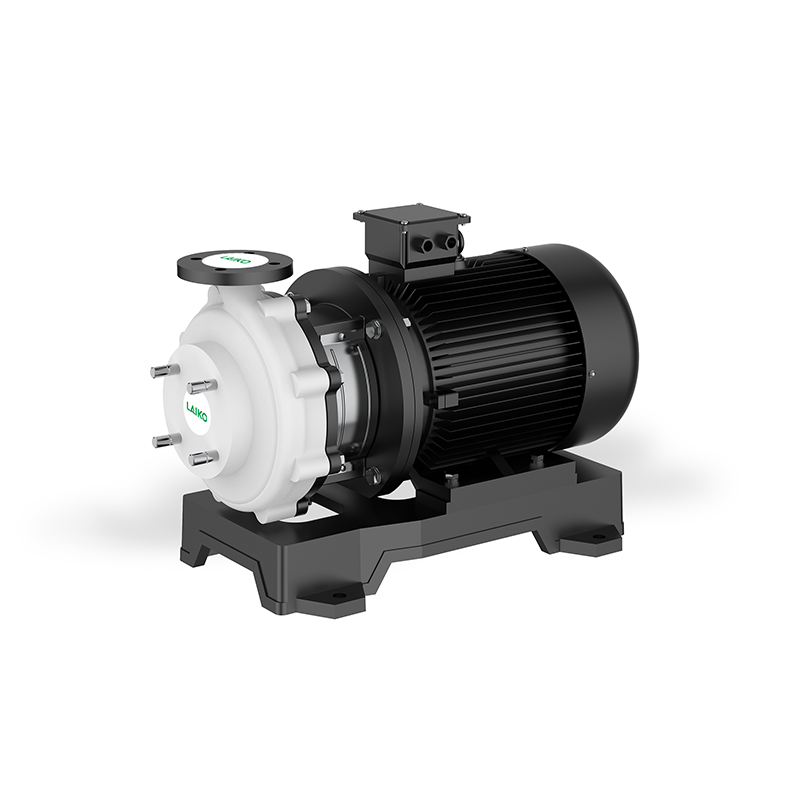
This category features highly engineered industrial plastics. They bridge the gap between pure chemical immunity and industrial-scale fluid transfer. The category includes solid molded plastic designs. It also covers robust fluoroplastic alloys. Metal-armored lined pumps heavily populate this group. A fluoroplastic centrifugal pump delivers unmatched chemical resistance. It easily handles highly aggressive media on a daily basis. It resists lethal hydrofluoric acid safely. It transports high-concentration sulfuric acid without degrading. Strong alkalis and mixed-acid waste streams do not damage the lining.
You must understand the practical engineering trade-offs. Plastics behave differently than solid metals under physical stress.
Thermal Limits: Plastics have strict and unyielding temperature ceilings. Pumping operations are generally capped between 120°C and 150°C. The exact limit depends entirely on the specific polymer chosen. FEP, PFA, and PTFE offer distinctly different thermal boundaries. Exceeding these limits causes the lining to blister or collapse entirely.
Mechanical Sensitivities: Fluoroplastics are somewhat mechanically sensitive compared to steel. Sharp, heavy abrasive solids will gouge the soft lining. You must specify a specialized open impeller if abrasives exist. Fluoroplastic alloys offer slightly better wear resistance. Furthermore, these pumps absolutely cannot withstand dry-running. Operating without fluid causes severe stator and rotor damage. Heat builds up instantly without fluid lubrication. Operators must install reliable run-dry protection systems. Flow monitors prevent these catastrophic internal meltdowns.
Head-to-Head Evaluation Matrix: Checking Your Chemical Fit
Choosing the best material requires a highly systematic approach. You must evaluate several dynamic process variables simultaneously. Let us break down the exact parameters required for long-term success.
Fluid Aggressiveness & Concentration Profile
Always cross-reference your exact chemical concentration accurately. Check the fluid pH against a verified, up-to-date compatibility chart. Chemical behavior changes drastically at different concentration percentages. A 10 percent acid solution behaves very differently than a 98 percent solution. Never assume a material resists all concentrations equally. Diluting a chemical sometimes makes it more corrosive to certain metals. You must provide your pump manufacturer with an accurate fluid assay before purchasing.
Temperature and Pressure Tolerances
You must evaluate the maximum operating temperature carefully. System design pressure is also a crucial deciding factor. Account for significant thermal expansion differences. Plastics expand at different rates than their exterior metal casings. This physical reality requires precise engineering in lined pumps. Dovetail grooves often lock the plastic lining directly to the metal. High temperatures weaken plastic structural integrity over time. Steel maintains its pressure rating at much higher thermal thresholds.
Presence of Abrasives and Solids
Always assess the expected wear rate of the internal components. High-velocity slurries erode soft fluoroplastic linings very fast. Hardened stainless alloys resist this mechanical erosion much better. If solids are present, adjust your material strategy immediately. You might need custom impeller coatings. Strainers placed before the pump inlet can remove large debris. This actively protects the delicate fluoroplastic internal surfaces.
Material Comparison Summary
The table below highlights the fundamental performance differences between the main materials.
Performance Metric | Stainless Steel (304/316L) | Fluoroplastic (PTFE/FEP/PFA) |
|---|---|---|
Broad Chemical Resistance | Moderate (Vulnerable to chlorides and strong acids) | Exceptional (Immune to nearly all industrial chemicals) |
Maximum Operating Temperature | Extremely High (Often exceeding 300°C) | Restricted (Capped at 120°C - 150°C) |
Mechanical Shock Tolerance | High (Forgiving of pipeline stress and water hammer) | Moderate (Requires rigid metal casing for support) |
Abrasion and Solid Handling | Excellent (Resists wear from high-velocity particulates) | Low (Susceptible to gouging without special alloys) |
Dry-Running Capability | Poor (Seal damage occurs, but casing survives) | Critical Failure (Severe melting of internal lining) |
Implementation Risks for a Chemical Pipeline Centrifugal Pump
Proper physical installation is just as critical as your material selection. You must address the physical realities of your industrial piping system. A chemical pipeline centrifugal pump faces unique structural stresses daily.
Fluoroplastic flanges are significantly less forgiving than heavy steel flanges. Inadequate pipeline support will rapidly cause stress fractures. These hairline fractures lead to highly hazardous chemical leaks. You must install robust, independent pipe hangers. Ensure perfect flange alignment during the initial installation. Never use the pump casing to pull misaligned pipes together. This will crack the plastic lining instantly.
Heavy chemicals demand very careful motor sizing. You must calculate the fluid's specific gravity accurately. Impeller trimming prevents dangerous motor overload conditions. High-density fluids require substantially more torque to move. A standard motor will burn out pumping dense sulfuric acid. Careful Net Positive Suction Head available (NPSHa) calculations prevent destructive cavitation. Cavitation destroys both metal and plastic impellers very quickly. Vapor bubbles collapse violently against the pump casing. This creates destructive shockwaves.
The mechanical seal is absolutely vital to the operation. A perfect pump body material is entirely useless otherwise. If the seal fails, the entire system fails. Magnetic drive configurations offer distinct environmental advantages. Mag-drive systems provide true zero-leakage performance. They eliminate the traditional dynamic mechanical seal entirely. A static containment shell separates the fluid from the atmosphere. This heavily prevents dangerous atmospheric emissions.
Conclusion
Proper pump specification demands rigorous and accurate fluid analysis. You cannot rely on guesswork or past assumptions. Small changes in a chemical process yield massive material consequences.
Start your shortlisting logic by examining the chemical's current Material Safety Data Sheet. Filter your options first by baseline chemical compatibility. Consider both the exact concentration and the operating temperature together. Next, filter by maximum system pressure requirements. Select the material meeting all these critical demands perfectly.
Take these concrete next-step actions:
Require your vendor to provide a certified hydraulic performance curve.
Demand a written material compatibility guarantee for your exact fluid.
Verify your pipeline support structures before attempting any installation.
Install reliable run-dry protection for all plastic-lined units.
Do not guess on these parameters. Consult engineering specialists to confirm your exact operating metrics. Protect your plant infrastructure with verifiable data.
FAQ
Q: Can a fluoroplastic chemical pump handle abrasive slurries?
A: Yes, but it has strict limitations. You must use specific fluoroplastic alloys to succeed. Specialized open impellers also help prevent premature wear. Standard fluoroplastics erode faster than hardened steel. Always consult your manufacturer when pumping high-velocity solids. Adding suction strainers greatly extends the lifespan of plastic components.
Q: At what temperature does stainless steel lose its corrosion resistance?
A: It depends entirely on the specific chemical. For some mild acids, resistance drops significantly above 60°C. In other benign applications, the metal remains stable up to 200°C. You must cross-reference the fluid type and temperature together. Elevated temperatures accelerate chemical reactions, rapidly increasing the corrosion rate on metal surfaces.
Q: Is it cheaper to replace a failing stainless pump or upgrade to fluoroplastic?
A: Frequent replacement of cheap metal pumps incurs massive hidden costs. You suffer plant downtime, labor expenses, and safety hazards. If corrosion causes failure within twelve months, upgrading material is mathematically better. It eliminates recurring maintenance penalties. Investing upfront in correct materials stabilizes long-term plant operational budgets.


