


Sewage Pump Free Passage: What to Check Before Selection
Views: 0 Author: Site Editor Publish Time: 2026-10-24 Origin: Site


Specifying a sewage pump is a high-stakes operational decision that directly impacts facility uptime. When you select hardware with insufficient solid-handling capabilities, your site risks chronic clogging, emergency maintenance, and premature motor failure. The most critical metric for mitigating these risks is "free passage," also known as spherical clearance. This measurement defines a pump's ability to move raw wastewater without obstruction from debris or suspended solids. To make an informed procurement choice, engineers and facility managers must evaluate their specific effluent profile against the pump's hydraulic design. Understanding how free passage influences reliability and system efficiency is essential for long-term success. This article provides a comprehensive technical framework to help you navigate these specifications and ensure your chosen equipment aligns with your infrastructure's unique demands. By mastering these details, you prevent costly downtime and maximize the lifespan of your critical pumping systems.
Key Takeaways
Free passage indicates the maximum spherical solid diameter that can pass through the pump volute and impeller without jamming.
Selecting the right clearance requires analyzing the specific effluent profile (e.g., hard solids vs. stringy materials like "flushable" wipes).
There is a direct engineering trade-off between a pump's free passage size and its hydraulic efficiency.
Impeller design (vortex vs. channel) drastically alters how a submersible sewage pump handles solids at identical free passage ratings.
Why Free Passage Defines Sewage Pump Reliability
Free passage represents the diameter of the largest solid sphere that can pass through the pump volute and impeller without causing a blockage. Manufacturers measure this in inches or millimeters. For most raw submersible sewage pump models designed for commercial applications, industry standards suggest a minimum baseline of 2 inches (50mm). Undersizing this specification invites significant operational risks. When solids exceed the internal clearance, they lodge within the impeller vanes. This causes immediate mechanical strain. Frequent jamming leads to motor overload, potential mechanical seal failure from excessive shaft deflection, and expensive emergency service visits. Furthermore, regulatory bodies often enforce strict standards for lift stations. Municipal codes frequently mandate specific free passage dimensions to ensure public safety and environmental compliance. Ignoring these requirements exposes your facility to legal liabilities and unnecessary infrastructure upgrades. Always verify that the equipment you install meets both your site's physical requirements and local regulatory benchmarks.
Evaluating Your Wastewater Profile
You must categorize your wastewater before finalizing a purchase. Different solid types demand different handling strategies. Organic waste typically breaks down easily, but modern wastewater often contains inorganic materials. Gravel, plastic, and unexpected construction debris present severe challenges to standard hydraulic designs. The rise of "flushable" wipes has introduced a new dilemma for pump engineers. These fibrous, stringy materials rarely act like rigid spheres. Instead of passing through a 2-inch opening, they entangle themselves around the impeller. This phenomenon, known as "ragging," effectively reduces the pump's functional free passage to near zero. Consider the application scale carefully. A residential septic tank has different needs compared to a high-volume industrial lift station. Relying on generic sizing logic often leads to failure. Analyze the typical concentration of solids and the presence of fibrous materials in your influent. This granular data ensures you select the correct equipment for your specific environment.
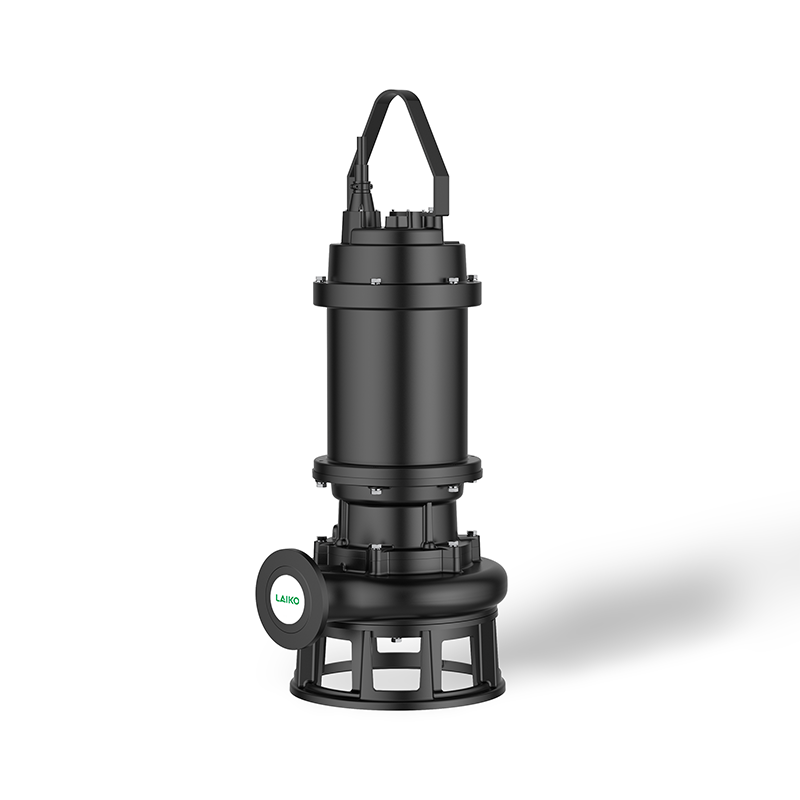
Impeller Technologies: Beyond the Raw Numbers
Selecting an impeller involves balancing hydraulic performance with clog resistance. You have several common designs to choose from, each offering distinct trade-offs.
Vortex Impellers
These impellers sit recessed in the volute. They create a powerful whirlpool effect, effectively pulling the majority of fluid through without it touching the impeller vanes. This design offers superior clog resistance. However, it often trades away hydraulic efficiency. You might experience higher electricity usage compared to other designs.
Single-Vane and Channel Impellers
These designs are ideal for handling high volumes of liquid. They provide excellent flow rates and strong head performance. The trade-off remains higher risk regarding ragging. If your influent contains long fibers, these impellers may clog more frequently than a vortex equivalent.
When Free Passage Isn't Enough
Sometimes, the solid content or the system piping limits prevent standard pump usage. If your system requires high head with very small discharge piping, a sewage pump with a large free passage might be impossible to install. In these cases, consider a grinder pump. Grinders reduce all solids to a fine slurry, allowing them to pass through small pipes without obstruction. The following table summarizes the relationship between impeller type, efficiency, and solid handling capabilities.
Table: Impeller Performance Characteristics
Impeller Type | Clog Resistance | Hydraulic Efficiency | Best Use Case |
|---|---|---|---|
Vortex | High | Moderate | Heavy solids and stringy material |
Single-Vane | Moderate | High | Clean, high-flow applications |
Channel | Moderate | High | Standard wastewater with low debris |
The Flow-to-Clearance Trade-off
You cannot ignore the physical laws governing pump performance. Larger free passage requires a wider, more open volute. This internal geometry inherently lowers hydraulic efficiency. You must accept that a pump designed for maximum solid passage will likely consume more power during daily operation. Pipeline scouring velocity remains another critical, often overlooked factor. Your pump must generate sufficient flow to maintain a minimum velocity of approximately 2 feet per second in the discharge pipe. If your pump's flow is too low, heavy solids will settle in the pipe, causing downstream blockages. Total Dynamic Head (TDH) also dictates your selection. Larger clearance requirements often limit a pump's maximum head capabilities. If your application involves deep lift stations with significant elevation changes, you need a pump that balances clearance with enough power to overcome the gravity of the column.
Selection Framework: Shortlisting the Right Submersible Sewage Pump
You should follow a systematic process to identify the best equipment for your site. Use the checklist below to organize your requirements and streamline the selection process.
Audit Existing Infrastructure: Check your current guide rail systems and control panels. Ensure new equipment fits existing piping dimensions perfectly.
Verify the Pump Curve: Review the performance curve specifically for your required free passage. Identify the Best Efficiency Point (BEP) to ensure optimal energy usage.
Material and Build Quality: Look for cast iron housings and hardened impeller materials. These features extend equipment life in abrasive environments.
Seal Systems: Prioritize dual mechanical seals to prevent moisture ingress. This is a critical component for maintaining a reliable submersible sewage pump.
Avoid purchasing based solely on marketing claims. Request field-tested case studies from manufacturers. Ask for proof of performance in conditions similar to your own. By performing these due diligence steps, you ensure the procurement process leads to a robust and long-lasting installation.
Conclusion
Specifying the correct free passage for your sewage pump is a precise balancing act. You are weighing the need for clog-free reliability against the necessity of operational energy efficiency. Prioritize your effluent profile over manufacturer generalizations, as the specific mixture of solids in your lines dictates the required impeller design and clearance. Always engage with professional application engineers before placing an order. They can assist in reviewing complex pump curves and validating that your infrastructure can support the pump's performance. Move beyond marketing claims by requiring verifiable solid-handling data. Taking these steps protects your facility from the hidden costs of downtime and ensures your wastewater systems operate at peak performance for years to come.
FAQ
Q: What is the minimum free passage for a standard commercial sewage pump?
A: The industry standard for commercial raw wastewater applications is generally 2 inches (50mm). This size is designed to prevent most common obstructions found in municipal or large facility systems. If your specific waste stream contains larger inorganic debris, you may require a larger clearance to prevent frequent blockages.
Q: Does a larger free passage mean the pump will never clog?
A: Not necessarily. A large free passage reduces the risk of hard solid jams, but it does not prevent all issues. Stringy materials, such as wet wipes or rags, can still cause "ragging" by entangling around the impeller vanes. Your success depends on matching the impeller technology to your specific waste characteristics.
Q: How do I know if my current submersible sewage pump has insufficient free passage?
A: Common symptoms include frequent thermal overload tripping, noticeably reduced flow rates, loud grinding noises during operation, and repetitive manual interventions to clear clogs. If you find yourself cleaning the impeller frequently, your pump likely lacks the necessary clearance for your influent profile.
Q: Should I choose a standard sewage pump or a grinder pump for stringy wastewater?
A: Use grinder pumps for systems with small-diameter pressure lines (typically 1.25 to 1.5 inches) or high-head requirements. They reduce solids to a slurry, preventing pipe clogs. Choose a standard non-clog pump with large free passage for gravity-fed systems and large-volume transfers where pipe diameter is not a limiting factor.


