


How to Choose High-Pressure Vertical Multistage Pumps for Industrial Water Transport and Fire-Fighting Pressure Boosting
Views: 0 Author: Site Editor Publish Time: 2026-08-21 Origin: Site


Underspecified pumping equipment introduces immense operational risks into any high-demand environment. Sudden pressure loss in a commercial high-rise disrupts daily operations completely. Worse, a catastrophic failure during fire suppression destroys valuable property and risks lives. Facility engineers must avoid these disastrous scenarios at all costs. Traditionally, building designs relied heavily on horizontal pumps. However, horizontal alternatives demand massive mechanical room real estate. Conversely, a vertical multistage pump provides a significantly smaller footprint. It stacks multiple impellers vertically to achieve superior high-head capabilities without consuming valuable floor space. Procurement managers currently face complex sourcing decisions. You need clear criteria to make the right choice. We provide a verifiable, spec-driven framework in this comprehensive guide. We will help you evaluate your system demands accurately. You will learn how to confidently source the correct pump architecture for your facility.
Key Takeaways
Proper selection requires aligning Total Dynamic Head (TDH) and Net Positive Suction Head (NPSH) with site-specific spatial constraints.
Industrial transport demands continuous-duty energy efficiency, whereas fire-fighting applications require specialized compliance (UL/FM) and fail-safe standby reliability.
Material selection (e.g., 304 vs. 316 stainless steel) dictates lifecycle costs and corrosion resistance across different fluid types.
Vendor shortlisting must prioritize local parts availability, transparent warranty terms, and Variable Frequency Drive (VFD) integration capabilities.
Assessing System Demands for Industrial Water Supply and Transfer Systems
You must first identify the exact pain points driving your purchase. Fluctuating line pressure plagues many high-rise buildings. Tenants often complain about inadequate water flow during peak morning hours. Excessive energy consumption frequently drains facility operational budgets. Furthermore, legacy mechanical rooms usually lack adequate space for equipment expansion. These specific issues drive modern equipment upgrades. You must frame the business problem clearly before reviewing specifications.
Establishing baseline operational metrics defines your success criteria. You cannot guess these numbers. Engineers must calculate the target flow rate in gallons per minute (GPM) or liters per minute (LPM). You must also define the required discharge pressure accurately. Acceptable energy draw limits help you filter out inefficient models. industrial water supply and transfer systems depend entirely on accurate initial calculations.
Structural constraints frequently mandate specific pump designs. A horizontal single-stage pump occupies excessive floor space. Stacking impellers vertically solves this spatial problem elegantly. You optimize floor space immediately. You simultaneously achieve the high discharge pressure necessary for tall structures. High-pressure applications make vertical orientation structurally mandatory. The compact footprint allows you to install multiple units side-by-side. This arrangement facilitates parallel operation and vital redundancy.
Core Technical Evaluation: Matching Pump Specifications to Reality
Reading pump curves correctly remains a critical engineering skill. You must ensure your duty point aligns closely with the manufacturer's data. Hydraulic coverage dictates overall system performance. The operating point should fall squarely within the Best Efficiency Point (BEP) region. Operating a pump outside its BEP wastes considerable energy. It also accelerates mechanical wear significantly. Engineers must verify the curve across varying flow conditions.
Net Positive Suction Head (NPSH) demands careful mathematical calculation. You must compare NPSH available (NPSHa) against NPSH required (NPSHr). Insufficient NPSHa causes fluid to vaporize. This creates destructive cavitation inside the pump casing. Cavitation destroys impellers and ruins mechanical seals quickly. It remains one of the most common implementation failures.
Follow these steps to prevent cavitation issues:
Calculate the absolute pressure at the suction liquid surface.
Subtract the fluid's vapor pressure at the maximum operating temperature.
Subtract the static lift distance if the pump sits above the source.
Subtract all friction losses in the suction piping network.
Ensure the final NPSHa exceeds the manufacturer's NPSHr by at least three feet.
Motor and drive compatibility requires rigorous evaluation. Standard Totally Enclosed Fan Cooled (TEFC) motors handle basic needs adequately. However, high-efficiency options like IE3 or IE4 motors lower energy expenses drastically. You must also assess readiness for Variable Frequency Drive (VFD) integration. VFDs handle variable load profiles effortlessly. They slow down the motor during low demand periods. This strategy protects the equipment and conserves valuable electricity.
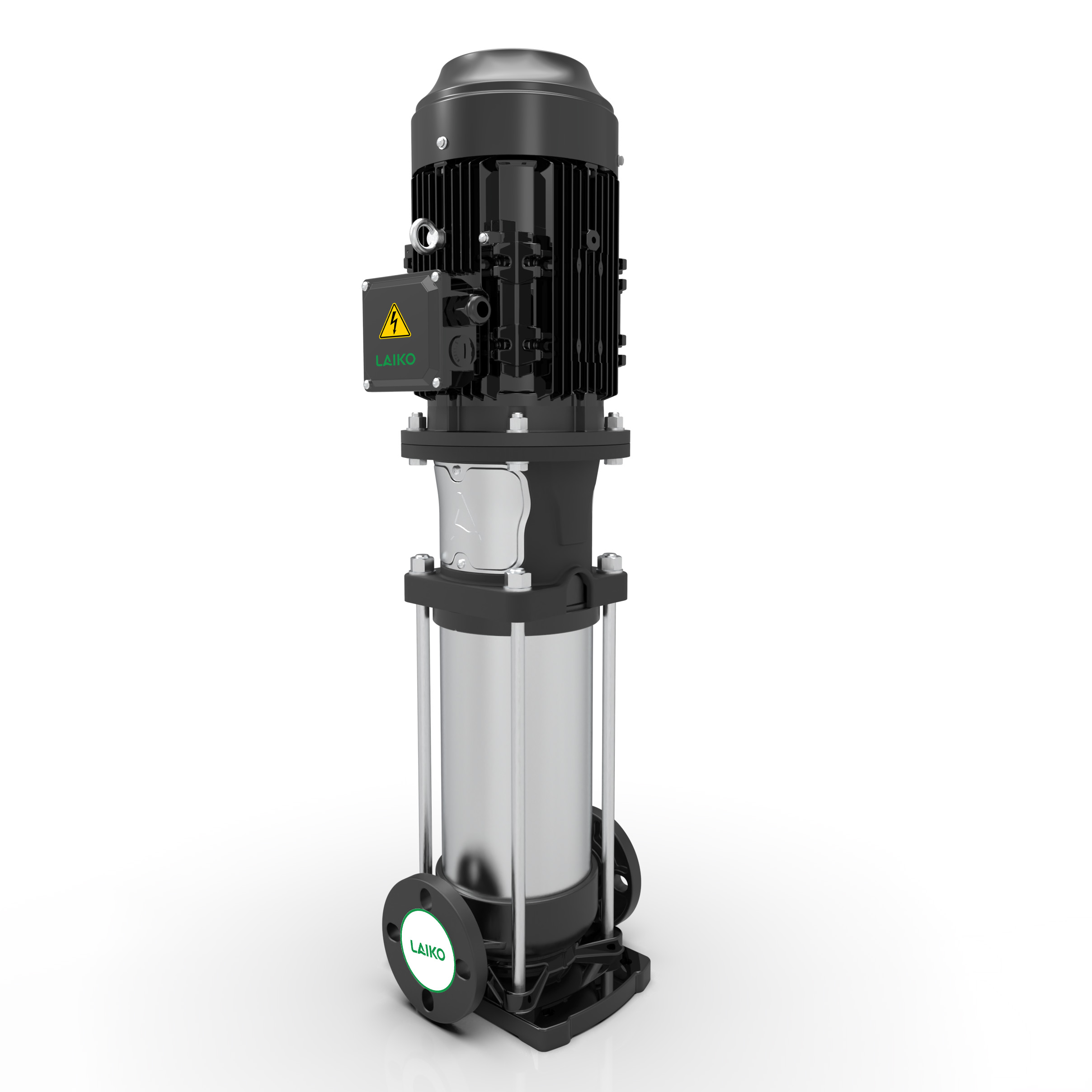
Application Lenses: Industrial High-Pressure Water Transport vs. Fire-Fighting Pressure Boosting
Different environments dictate entirely different engineering priorities. We must view specifications through the correct application lens. industrial high-pressure water transport focuses heavily on continuous-duty reliability. These pumps run for thousands of hours annually. Energy optimization becomes a primary financial concern. Facilities often integrate these pumps directly with automated building management systems. They handle process water seamlessly. They supply boiler feed systems reliably. Reverse Osmosis (RO) networks rely on them to push water through dense filtration membranes.
Conversely, fire-fighting pressure boosting operates under different rules. These critical systems focus entirely on standby readiness. A fire pump might sit idle for several months. However, it must deliver instantaneous torque the moment a fire breaks out. Standby reliability outweighs energy efficiency in this scenario. You cannot compromise on fail-safe designs.
Regulatory compliance remains strictly enforced for safety applications. Authoritative standards govern every aspect of the equipment. You face a non-negotiable requirement for UL-listed components. FM-approved parts are equally mandatory. Building inspectors will reject uncertified equipment immediately.
Performance curve requirements also differ between these two applications. Industrial pumps often utilize steep curves for precise flow control. Fire applications require exceptionally flat performance curves. A flat curve ensures consistent pressure across the system. It maintains stability even when varying numbers of sprinkler heads activate simultaneously.
Material Architecture and Lifecycle Cost Breakdown
Fluid quality dictates your metallurgy choices. Standard municipal water contains trace amounts of chlorine. A hybrid design often suffices for clean environments. You can pair cast iron bases with stainless steel internal components. This approach keeps upfront costs manageable. However, aggressive fluids demand better protection. Moderate chlorination requires full 304 stainless steel construction. Reverse osmosis systems present even harsher conditions. Demineralized water actively strips ions from standard metals. You must specify full 316 stainless steel to prevent rapid corrosion.
Seal technologies influence maintenance schedules heavily. You must evaluate mechanical seal types carefully. Standard mechanical seals require extensive dismantling during replacement. This causes unacceptable system downtime. Cartridge seals offer a superior alternative. They slide out easily for rapid onsite replacement. Fluid temperature also influences seal selection. High-temperature boiler feeds require specialized elastomers. Viton or EPDM materials prevent thermal degradation effectively.
Engineers must balance upfront capital expenditure (CapEx) against long-term operating expenses (OpEx). Budgeting solely for the initial purchase price is a common mistake. Energy consumption typically accounts for over 85% of a pump's lifetime cost. Purchasing a slightly more expensive, high-efficiency unit saves money rapidly. High-quality stainless steel reduces maintenance frequency. Precision-engineered impellers optimize energy usage over time.
Implementation Risks and Vendor Shortlisting Logic
Installation realities often ruin excellent engineering designs. Pipe strain represents a massive rollout failure. Installers sometimes force misaligned heavy pipes onto delicate pump flanges. This stress transfers directly to the pump casing. It eventually misaligns the internal shaft and destroys bearings. You must support all piping independently. Improper foundation vibration isolation causes similar damage. You should mount pumps on dedicated inertia bases. Use spring isolators to absorb destructive harmonics.
Integration risks complicate facility retrofits frequently. Legacy pipework often features incorrect sizing for modern high-flow units. Attempting to force high volumes through narrow pipes causes excessive friction. VFD harmonic distortion presents another invisible threat. The drive's electronics can interfere with nearby sensitive equipment. You must install line reactors to mitigate this electrical noise.
Vendor shortlisting requires a strict, logical matrix. Do not choose manufacturers based on price alone. Evaluate their historical track record carefully. Demand verifiable experience in similar high-rise or industrial environments. You must review testing documentation thoroughly. Factory Acceptance Tests (FAT) prove the equipment meets your specific parameters before shipping. Transparency builds necessary trust.
Check the availability of critical wear parts immediately. Global supply chains fluctuate constantly. You need replacement seals, impellers, and bearings quickly. Local parts availability prevents extended system downtime.
Vendor Evaluation Criteria
Evaluation Category | Crucial Requirements | Common Red Flags |
|---|---|---|
Historical Track Record | Verifiable case studies in high-rise/industrial spaces | Inability to provide relevant local references |
Testing Transparency | Provides complete Factory Acceptance Test (FAT) reports | Refusal to share certified pump performance curves |
Regulatory Compliance | Clear UL-listed and FM-approved documentation | Vague claims about meeting generic safety standards |
Parts Availability | Local warehousing of seals, bearings, and impellers | Lead times exceeding four weeks for standard wear parts |
Conclusion
Choosing reliable high-pressure vertical multistage pumps requires a careful balancing act. You must weigh hydraulic precision against material durability constantly. Application-specific compliance remains an absolute necessity for safety systems. High-pressure vertical multistage pumps deliver exceptional efficiency when specified correctly. Do not skip the rigorous mathematical evaluations required for success.
Your next step requires immediate action. Finalize your site's Total Dynamic Head and NPSH calculations today. Gather your facility's specific spatial constraints. Request highly specified quotes from your shortlisted manufacturers. Demand verifiable pump curves alongside every proposal. Proper planning and precise calculations guarantee long-term operational reliability.
FAQ
Q: What is the difference between standard and fire-rated vertical multistage pumps?
A: Fire-rated pumps focus heavily on fail-safe standby design and immediate torque delivery. They undergo rigorous testing to meet mandatory UL/FM compliance standards. Standard pumps optimize for continuous-duty energy efficiency. Fire pumps utilize flat performance curves to maintain consistent pressure across variable sprinkler demands, ensuring maximum reliability during emergencies.
Q: How do I prevent cavitation in high-pressure vertical multistage pumps?
A: You prevent cavitation by ensuring a positive margin between available and required suction head. Calculate your NPSH available (NPSHa) accurately. It must exceed the manufacturer's NPSH required (NPSHr) by at least three feet. Additionally, design inlet piping carefully. Avoid sharp elbows near the suction flange to maintain smooth flow.
Q: Can these pumps be retrofitted into existing horizontal pump footprints?
A: Yes, retrofitting is highly advantageous due to their compact footprint. However, you must modify existing piping alignments to match the vertical inline flange configurations. You also need to verify adequate vertical clearance above the unit. Mechanics require overhead space to remove motors and access internal cartridge seals.
Q: What is the typical maintenance schedule for industrial water transport applications?
A: Maintenance schedules depend heavily on operational hours and fluid quality. Generally, you should inspect mechanical seals for minor leaks every six months. Standard bearing lubrication intervals occur every 3,000 to 4,000 operating hours. Always monitor the pump weekly for unusual vibrations or sudden drops in discharge pressure.


