


How to Size Commercial Booster Pumps for Buildings
Views: 0 Author: Site Editor Publish Time: 2026-07-29 Origin: Site


Unreliable water pressure in commercial facilities directly impacts tenant satisfaction. It also creates compliance liabilities and accelerates plumbing wear across the entire property. Selecting the proper Commercial Water Pumps requires balancing precise peak demand calculations alongside energy efficiency goals and strict municipal building codes. Unfortunately, many designers over-size equipment, wasting capital and energy over the system's lifespan. Conversely, under-sizing leads to critical performance failures during peak usage hours. We aim to provide facility managers, MEP engineers, and building owners with an evidence-based roadmap for sizing these essential systems. You will learn how to calculate flow rates, navigate zoning strategies, and evaluate vendor proposals effectively. Following these guidelines will help you mitigate deployment risks while ensuring reliable, compliant water delivery.
Key Takeaways
Accurate sizing relies on two immutable metrics: Peak Flow Rate (Gallons Per Minute - GPM) based on fixture counts, and Total Dynamic Head (TDH) factoring in vertical lift and friction.
A constant-pressure booster system using Variable Frequency Drives (VFDs) is now the industry standard for optimizing energy consumption and extending pump lifespan.
High-rise building booster pump selection requires pressure zoning strategies to prevent pipe bursts on lower floors while satisfying pressure codes on upper levels.
Final selection must align with local plumbing codes (e.g., IPC) regarding maximum allowable fixture pressure and minimum required residual pressure.
The Business Impact of Accurate Pump Sizing
Many property developers assume bigger equipment guarantees better performance. This outdated mentality drives up unnecessary capital expenditures. Oversized equipment operates inefficiently on a daily basis. These massive units draw excessive electricity over a standard 15 to 20-year lifecycle. They cycle on and off too frequently. This rapid cycling spikes operational expenditures and wastes energy. Properly matching equipment size to actual demand keeps utility bills under control and extends equipment longevity.
Excessive pressure also harms your infrastructure. Improperly sized units slam pressure reducing valves (PRVs) and degrade pipe joints. High-velocity water flow erodes internal pipe walls over time. Fixtures leak prematurely when exposed to constant over-pressurization. A correctly engineered system protects these downstream plumbing components. It minimizes the risk of catastrophic pipe bursts and costly emergency repairs.
Consistent water delivery serves as a baseline requirement for tenant retention. Commercial leases, hospitality venues, and healthcare facilities all demand reliable utility access. Plunging pressure during peak morning hours frustrates hotel guests. In medical facilities, inconsistent flow creates severe compliance liabilities. You must deliver adequate flow across all floors seamlessly. Accurate system design directly protects your leasing revenue and property reputation.
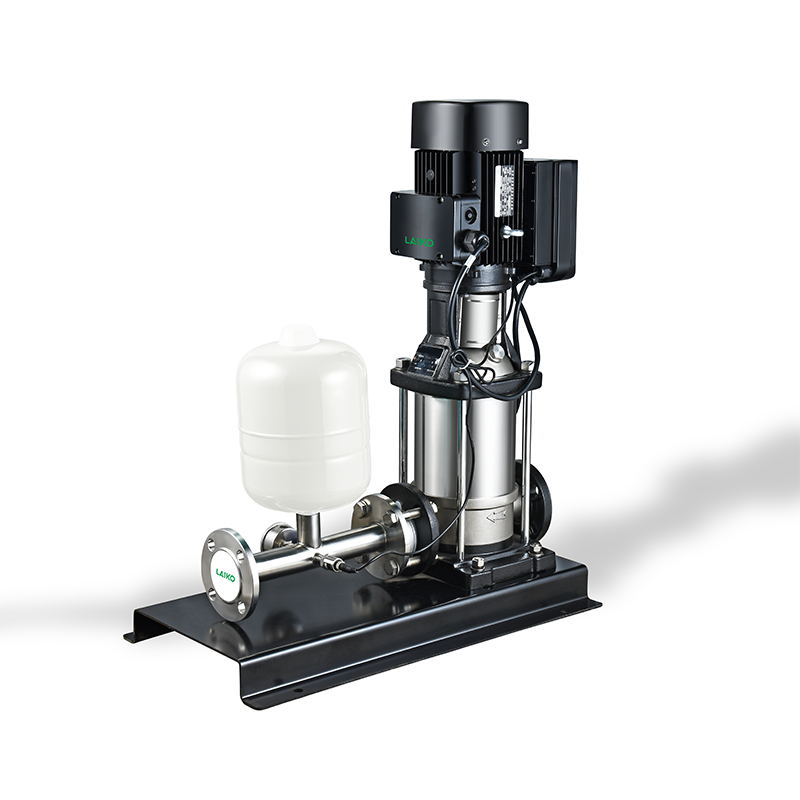
Core Engineering Metrics for Commercial Water Pumps
To properly specify commercial booster pumps, engineers rely on precise mathematical calculations rather than estimates. You must determine both the peak volume of water required and the force needed to move it through the building.
Calculating Peak Flow Rate (GPM)
Plumbing engineers use Water Supply Fixture Units (WSFU) to quantify demand. Each plumbing fixture receives a specific WSFU value based on its flow characteristics. A commercial flush-valve toilet requires more immediate volume than a standard restroom sink. You tally these individual units across the entire building to establish a baseline.
However, you cannot simply add up every fixture's maximum flow. People rarely use every toilet and sink simultaneously. We apply Hunter's Curve to translate total WSFU into a realistic Peak Flow Rate (GPM). This established statistical model predicts probable simultaneous usage. It prevents drastic over-sizing by reflecting real-world human behavior.
You must adjust these calculations based on the building type. Consider these typical usage patterns:
Residential buildings experience sharp morning and evening usage spikes.
Office towers show steady moderate usage with brief surges during lunch hours.
Hospitality and gym facilities sustain massive, prolonged peak demands requiring robust flow reserves.
Determining Total Dynamic Head (TDH)
Volume only solves half the equation. You must also calculate Total Dynamic Head (TDH). This metric defines the total resistance your equipment must overcome to deliver water effectively.
TDH calculations incorporate four main elements. First, you measure static lift. This represents the vertical distance from the pump discharge to the highest plumbing fixture. Second, you calculate friction loss. Water loses energy as it travels through pipes, elbows, and isolation valves. Older, scaling pipes create significantly more friction than new copper lines.
Third, you must measure the baseline city supply pressure. Municipal mains provide initial pushing force. You subtract this baseline pressure from your total requirement. Finally, you factor in residual pressure. This is the minimum PSI required at the furthest or highest fixture to operate correctly. Standard faucets might only need 15 PSI, while commercial flush valves often demand 25 to 35 PSI.
TDH Component | Definition | Impact on Sizing Calculation |
|---|---|---|
Static Lift | Vertical distance to the highest fixture | Determines the baseline vertical pushing force required. |
Friction Loss | Pressure lost through pipes and fittings | Increases required head pressure; varies by pipe material. |
City Supply Pressure | Incoming municipal water main pressure | Subtracted from the total head requirement. |
Residual Pressure | Required operating PSI at the final fixture | Ensures fixtures function correctly at the top floor. |
High-Rise Building Booster Pump Selection vs. Low-Rise Applications
Proper high-rise building booster pump selection involves vastly different architectural considerations compared to low-rise projects. Buildings exceeding six to eight stories face unique hydraulic challenges. You cannot simply push water from the basement to the 30th floor using one massive unit.
Doing so requires immense pressure at the basement level. This extreme force would easily shatter pipes and fixtures on the lower floors. To solve this, engineers implement pressure zoning architectures. They divide the building into vertical zones. Each zone receives regulated pressure within safe operating limits. This ensures tenants on the second floor experience the same safe water pressure as tenants on the top floor.
Designers achieve this through cascading systems. Some buildings utilize intermediate transfer tanks situated on mechanical floors. Water pumps upward into these mid-level tanks. A secondary system then draws from this tank to feed upper floors. Alternatively, engineers use direct-line multi-stage pumping. This method pushes water continuously but relies heavily on sophisticated pressure reducing valves at each floor branch.
Urban environments also impose strict space and weight constraints. Roof-mounted systems save valuable basement real estate. However, they require substantial structural reinforcement to support the heavy equipment and water weight. Basement-mounted skid systems remain common but demand careful acoustic isolation to prevent noise transmission to the ground floor lobby.
Why the Industry is Shifting to the Constant-Pressure Booster System
Modern facilities demand intelligent mechanical solutions. A constant-pressure booster system using Variable Frequency Drives (VFDs) has replaced outdated fixed-speed technology. Older systems ran motors at full speed constantly. They relied on mechanical valves to choke back excess pressure. This approach wasted immense amounts of energy.
VFD technology adjusts motor speed dynamically. Sensors monitor real-time pressure in the piping network. The drives speed up the impellers during peak morning showers. They slow the motors down to a crawl during overnight off-peak hours. This continuous modulation drastically reduces energy consumption. It aligns electrical draw perfectly with actual physical demand.
Furthermore, VFDs significantly reduce mechanical wear. Traditional units slam on at full RPM. This creates a violent water hammer effect. The sudden force shocks pipe joints and degrades seals. VFDs utilize soft-start programming. They ramp up motor speed gradually. This smooth acceleration protects the entire plumbing infrastructure from kinetic stress.
Redundancy represents another major advantage. Engineers rarely install a single motor. They specify duplex or triplex alternating setups. A duplex configuration features two identical motors. The system controller alternates their run cycles evenly. If one motor fails, the second immediately takes over. This fail-over capability guarantees zero downtime during crucial maintenance procedures.
Navigating Building Codes and Compliance Standards
Local plumbing codes dictate strict boundaries for commercial installations. You cannot design a system based purely on theoretical efficiency. The International Plumbing Code (IPC) mandates several non-negotiable safety limits.
Most importantly, the IPC restricts maximum allowable pressure at any user fixture. Typically, this limit caps at 80 PSI. Exceeding this threshold risks severe user injury. It also causes catastrophic failure in standard plumbing fixtures. You must carefully balance your TDH calculations to guarantee sufficient residual pressure at the top floor without breaching the 80 PSI limit on the bottom floor.
Energy codes also govern equipment selection. Standards like ASHRAE 90.1 mandate specific efficiency levels. Modern updates frequently require VFD integration on any motor exceeding a certain horsepower. Ignoring these energy standards prevents you from securing occupancy permits and blocks access to green building certifications.
Water quality and backflow prevention remain critical. Potable water networks must integrate backflow prevention devices. These heavy valves stop contaminated water from flowing backward into the municipal main. Unfortunately, these devices introduce significant friction loss. You must account for this pressure drop in your initial TDH calculations. All wetted components must also carry NSF/ANSI 61 certification. This ensures no toxic materials leach into the drinking water supply.
Implementation Risks and Vendor Shortlisting Logic
Purchasing equipment requires careful evaluation beyond just flow charts and pricing. You must decide between site-built systems and factory-packaged skids. Assembling components on-site offers flexibility for tight mechanical rooms. You can maneuver individual pieces through narrow doorways more easily.
However, packaged skids dominate the market for good reason. Manufacturers assemble and test these complete units in a controlled factory environment. This eliminates on-site assembly errors. It dramatically reduces expensive installation labor. The entire skid arrives pre-wired and hydrostatically tested, allowing contractors to simply connect the main inlet, outlet, and power supply.
When shortlisting vendors, apply strict evaluation criteria. Do not select a manufacturer based solely on upfront equipment costs. Use the following criteria to evaluate potential partners:
Verify the availability of localized commissioning support and regional maintenance technicians.
Check the lead times for critical replacement parts, specifically impellers and VFD controllers.
Demand absolute transparency in their published performance curve documentation to verify efficiency claims.
Ensure they provide comprehensive acoustic data and vibration isolation pads if noise transmission concerns exist.
Your definitive next step involves a thorough site evaluation. Conduct a comprehensive fixture audit across the entire facility. Document the baseline municipal supply pressure during both day and night hours. Consult closely with an MEP engineer to validate these figures before issuing an official Request for Proposal.
Conclusion
Sizing mechanical infrastructure remains an exact science. It is never a guessing game. The longevity of your plumbing network depends on precise initial calculations. We have shown how the optimal system successfully bridges the gap between physical demands, energy efficiency, and strict regulatory codes.
You must balance GPM and TDH metrics carefully. Implementing VFD technology protects your pipes while drastically reducing energy waste. High-rise applications demand specialized zoning to ensure safety and reliability across every floor. Every engineering decision must prioritize tenant satisfaction alongside strict IPC compliance.
Take immediate action to safeguard your facility operations. Audit your current municipal incoming pressure using calibrated gauges. Tally your actual fixture counts across all floors. Bring this concrete data to your engineering team. Gathering these exact metrics serves as the crucial first step before you contact any equipment manufacturer.
FAQ
Q: What is the average lifespan of a commercial booster pump?
A: A well-maintained unit typically lasts between 10 to 15 years. Lifespan depends heavily on proper sizing and regular maintenance. Oversized units experience short-cycling, which burns out motors prematurely. Utilizing VFDs extends this lifespan by reducing kinetic stress and mechanical wear during start-up sequences.
Q: Should I choose a duplex or triplex booster pump system?
A: Your choice depends on building criticality, available footprint, and budget. A duplex system provides basic redundancy for standard commercial buildings. A triplex system offers superior peak-load distribution. It handles extreme demand surges effortlessly and provides enhanced fail-over protection for highly critical healthcare or hospitality facilities.
Q: Can I upgrade my existing fixed-speed pump to a constant-pressure system?
A: You can retrofit VFD controllers onto older fixed-speed motors in some cases. However, older motors may lack the insulation required to handle variable frequency currents. Often, replacing the entire aging, inefficient motor assembly provides a better return on investment through immediate, substantial energy savings.
Q: Why is my commercial building losing water pressure only on the top floors?
A: Top-floor pressure loss usually indicates an aging or undersized unit failing to meet the required Total Dynamic Head (TDH). It can also result from drops in the municipal supply pressure or failing pressure reducing valves within your internal piping network. A professional hydraulic audit can isolate the exact cause.


