


Pump MEI vs. Motor IE Ratings: What Is the Difference?
Views: 0 Author: Site Editor Publish Time: 2026-11-13 Origin: Site


Procurement teams often fall into a deceptively simple trap when upgrading facility infrastructure. They mistake a pump's hydraulic efficiency for its motor's electrical efficiency. This specific blind spot leads directly to highly inaccurate operating expense projections. Modern industrial and commercial pumping systems demand a far more rigorous dual-compliance evaluation. You cannot simply look at a single nameplate number to gauge overall performance. Facilities must scrutinize how well each distinct component performs under active, real-world loads to meet strict energy regulations.
Understanding the distinct roles of Pump MEI and Motor IE ratings provides the only verifiable way to evaluate total system efficiency. In this comprehensive guide, we will break down exactly what these specific metrics mean. You will discover how to unify them properly and guarantee your high-CAPEX equipment upgrades deliver real, measurable returns.
Key Takeaways
MEI (Minimum Efficiency Index) strictly measures the hydraulic efficiency of the pump wet end (how well it moves fluid).
IE (International Efficiency) measures the electrical efficiency of the motor driving the pump (how well it converts electricity to mechanical power).
Total System Efficiency requires evaluating both ratings simultaneously; pairing a premium IE4 motor with a low-MEI pump yields poor real-world energy savings.
Procurement should evaluate the target duty point against the pump's Best Efficiency Point (BEP), rather than relying solely on nameplate ratings.
Defining the Baselines: Understanding MEI and IE Metrics
Evaluating pump systems correctly forms the foundation of regulatory compliance and operational profitability. Purchasing non-compliant equipment exposes your facility to regulatory fines. Conversely, installing underperforming equipment drains your operational budget silently over time. We must establish clear baselines to avoid these costly procurement mistakes.
What is Pump MEI?
The Minimum Efficiency Index (MEI) serves as a strict hydraulic benchmark. The European ErP (Energy-related Products) Directive originally established this metric to eliminate poorly designed pumps from the market. Global regulatory bodies have since adopted it widely. MEI focuses exclusively on the hydraulic efficiency of the pump's wet end. It measures performance across three critical operational points: the Best Efficiency Point (BEP), part load (PL), and overload (OL).
Currently, an MEI of 0.40 or higher represents the legal compliance standard in many jurisdictions. This means the pump performs better than the bottom 40% of pumps available in the market. However, an MEI of 0.70 or above indicates a highly efficient hydraulic design. You should target this higher benchmark for maximum energy conservation in demanding industrial applications.
What are Motor IE Ratings?
The International Electrotechnical Commission (IEC) established International Efficiency (IE) classes. These ratings measure how effectively an electric motor converts electrical energy into mechanical power. The scale ranges from IE1 (Standard Efficiency) up to IE5 (Ultra Premium Efficiency). The testing methodology strictly evaluates electrical losses, including stator resistance, rotor resistance, and magnetic core losses.
The industry standard has shifted rapidly over the last decade. IE3 (Premium Efficiency) now serves as the baseline for most new commercial installations. Upgrading to IE4 (Super Premium) or IE5 (Ultra Premium) reduces motor losses significantly. Manufacturers achieve these higher ratings by using more copper, higher-grade electrical steel, and sometimes permanent magnet technology. You must weigh the higher initial purchase price against the long-term energy savings these advanced motors provide.
Comparison of Efficiency Metrics
Metric | Focus Area | Governing Standard | Key Measurement Points |
|---|---|---|---|
Pump MEI | Hydraulic Wet End | European ErP Directive | BEP, Part Load (PL), Overload (OL) |
Motor IE | Electrical Motor | IEC 60034-30-1 | Electrical to Mechanical Conversion |
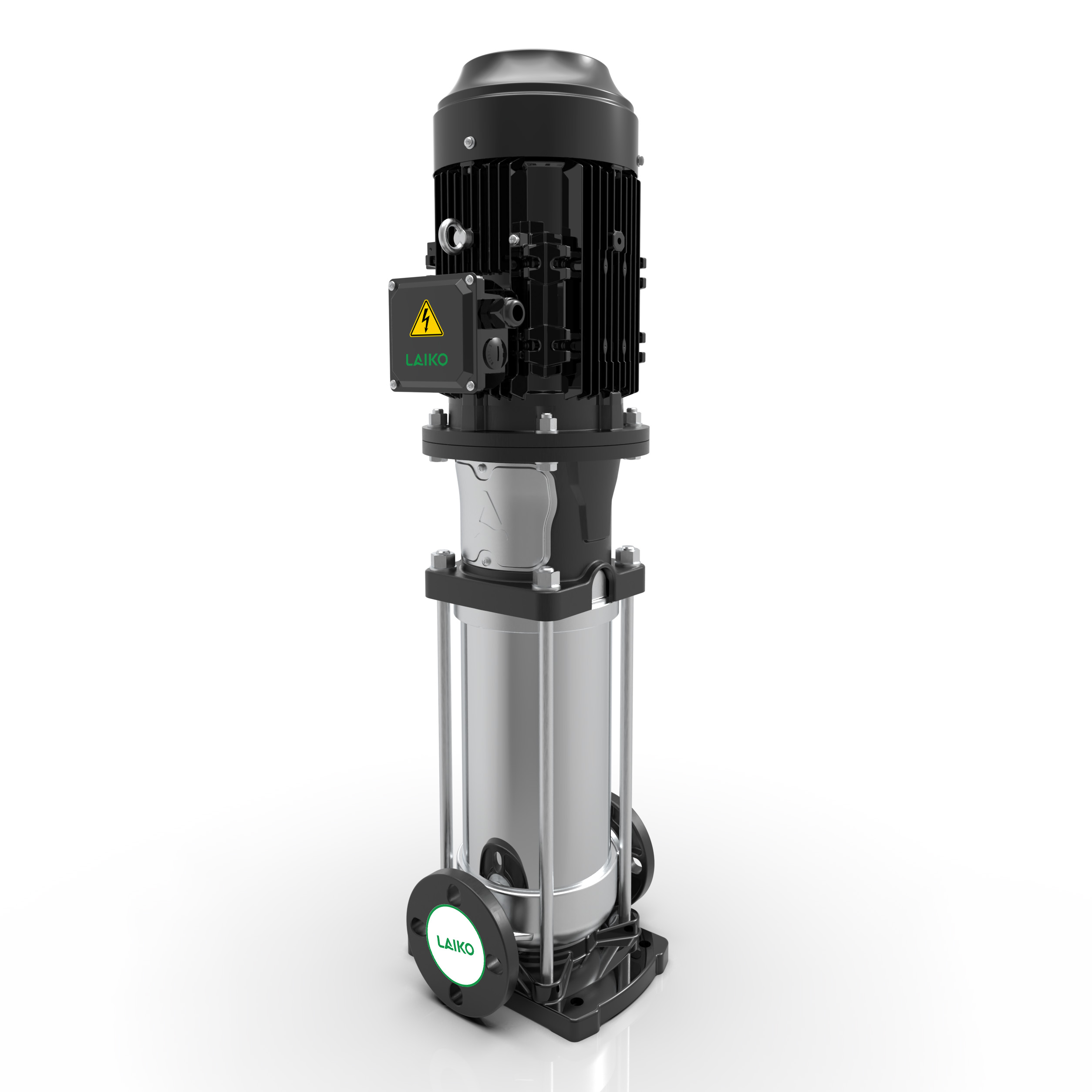
Why Evaluating Both Ratings Matters for Energy-Saving Vertical Multistage Pumps
Coupled systems operate as a single, unified machine. You cannot isolate the motor from the pump wet end when evaluating performance. Manufacturers engineer modern energy-saving vertical multistage pumps to optimize both the MEI and IE standards simultaneously. This dual optimization ensures the mechanical impellers and the electrical drive components work in perfect harmony.
The Multiplier Effect
Total system efficiency relies on a simple but unforgiving mathematical formula. You calculate it by multiplying the pump efficiency by the motor efficiency. A bottleneck in either metric destroys your overall efficiency. The formula looks like this: Total Efficiency = Pump Efficiency × Motor Efficiency.
Consider a scenario where you pair a highly efficient IE5 motor (96% efficiency) with a poorly designed pump wet end (60% efficiency). The total system efficiency drops to just 57.6%. The poor hydraulic design completely wastes the premium motor's electrical gains. You essentially pay a premium price for an IE5 motor but receive sub-standard system performance.
System Efficiency Multiplier Chart
Motor Efficiency (IE Class) | Pump Efficiency (MEI Indicator) | Total System Efficiency | Performance Outcome |
|---|---|---|---|
IE3 (94%) | Low MEI (60%) | 56.4% | Poor - Hydraulic Bottleneck |
IE5 (96%) | Low MEI (60%) | 57.6% | Poor - Wasted Motor Investment |
IE3 (94%) | High MEI (80%) | 75.2% | Good - Balanced System |
IE5 (96%) | High MEI (80%) | 76.8% | Excellent - Fully Optimized |
Continuous Operation Impact
Minor percentage differences in combined efficiency compound rapidly over time. Industrial and commercial pumps often run on continuous 24/7 operating cycles. A mere 2% drop in combined efficiency translates to thousands of wasted kilowatt-hours annually. This continuous energy drain directly impacts your lifetime energy costs. When you evaluate equipment, you must project these minor percentage differences across a 10-to-15-year operational lifespan to understand the true financial impact.
Calculating True System Efficiency and ROI
We must transition from reviewing technical specifications to conducting a rigorous financial evaluation. High ratings on a manufacturer's spec sheet mean nothing if they do not translate into measurable financial outcomes for your facility.
Transparent ROI Assumptions
Accurate payback calculations require precise, localized data. You cannot rely on generic industry estimates. You must gather several specific variables to build a reliable financial model:
Localized kWh costs: Include both peak and off-peak utility rates, as well as any demand charges your facility incurs.
Operational hours per year: Determine exactly how long the pump runs daily. A pump running 8,000 hours annually justifies a premium upgrade much faster than a backup pump running 500 hours.
Accurate load profiles: Map your flow demands over time. Does the pump run at full speed constantly, or does the demand fluctuate throughout the day?
Manufacturers frequently advertise "up to 30% energy savings" in their marketing materials. These claims almost always assume ideal, steady-state conditions. Real-world applications fluctuate constantly. We strongly advise running your calculations based on site-specific load variance. Trust the physics of your specific system over generalized marketing claims.
Cost vs. Benefit
You need a clear decision framework for capital allocation. When should you invest in an IE4 or IE5 motor? When should you upgrade the pump hydraulics first? Generally, upgrading a low-MEI pump yields a faster payback than upgrading an IE3 motor to an IE5 motor. The mechanical losses in a poor wet end far exceed the electrical losses in a standard motor. Always fix the hydraulics first. Once you secure a high-MEI pump, adding an IE5 motor will maximize your final efficiency gains.
Implementation Risks: When High Ratings Fail to Deliver
Operational realities frequently invalidate nameplate efficiency. We see many facilities invest heavily in premium equipment, only to experience disappointing results. You must understand the common implementation risks that sabotage high-efficiency ratings.
The Oversizing Trap
Engineers often add generous safety margins during the initial design phase. This practice inevitably leads to specifying an oversized pump. An oversized pump forces the system to operate far to the left of its Best Efficiency Point (BEP). Operating off-BEP negates both high MEI and IE ratings entirely. The pump wastes massive amounts of energy generating excess pressure, which control valves then burn off as heat and noise. You must size the pump to match the actual system demand, not an inflated theoretical maximum.
VFD (Variable Frequency Drive) Compatibility
Retrofitting Variable Frequency Drives (VFDs) to standard IE motors introduces significant mechanical and electrical risks. VFDs generate electrical harmonics and common mode voltages. These anomalies can cause premature bearing failure through electrical fluting and rapid insulation breakdown. A true energy-efficient vertical multistage pump must feature motor insulation and bearings specifically rated to handle VFD-induced harmonics. You must verify this compatibility to maintain equipment longevity and prevent catastrophic unexpected downtime.
System Resistance & Maintenance
Premium-rated pumps cannot overcome poor system design. High pipe friction, clogged filtration systems, and restrictive pipe fittings artificially inflate system resistance. This forces the pump to work harder to deliver the required flow. Regular maintenance remains non-negotiable. Neglected systems will override the benefits of even the highest-rated equipment. You must keep strainers clean, monitor pipe scaling, and ensure valves operate smoothly to protect your efficiency investments.
Shortlisting Your Commercial Centrifugal Pump Range
Procurement and engineering teams need practical, actionable steps to navigate the complex pump market. You must apply strict shortlisting logic to filter out underperforming equipment.
Evaluating Vendor Documentation
You must demand rigorous proof from your suppliers. Do not accept glossy marketing brochures as technical evidence. Request ISO 9906 verified test curves for every pump model. Ask for comprehensive part-load performance data to see how the pump behaves off-peak. Require explicit MEI and IE certificates for every unit. If a vendor hesitates to provide this granular data, you should remove them from your shortlist immediately.
Application Matching
You must match the right pump type to the specific task. For example, you must verify that a vertical multistage water supply pump is the correct hydraulic fit for high-head, variable-flow building services. You must confirm this hydraulic suitability before you even look at the IE ratings. A highly efficient motor attached to the wrong pump type will still waste energy. Evaluate the system curve against the pump curve first.
Next-Step Actions
We recommend conducting a comprehensive baseline energy audit of your existing pumping system. Establish your current total efficiency first. Measure your actual flow rates, pressure drops, and power consumption. Once you have this accurate baseline, you can confidently request RFQs for a new commercial centrifugal pump range. This data-driven approach ensures you only pay for performance upgrades that your system actually needs.
Conclusion
MEI and IE represent distinct but deeply interconnected metrics. Isolating one while ignoring the other guarantees sub-optimal procurement. You must evaluate the complete package to achieve true energy savings. A premium motor cannot rescue a poor hydraulic design, and a brilliant wet end will suffer if driven by an inefficient motor.
We encourage buyers to request comprehensive performance curves mapped against their specific duty points. Stop buying off top-line efficiency ratings alone. Demand verifiable data that reflects your actual operating conditions. By unifying MEI and IE evaluations, you will secure reliable equipment, achieve regulatory compliance, and drastically reduce your long-term energy expenditures.
FAQ
Q: Can I upgrade my motor to an IE4 rating without changing the pump?
A: Yes, but if the pump has a low MEI or operates off its BEP, the mechanical losses will outweigh the electrical gains.
Q: Is MEI relevant for pumps controlled by a Variable Frequency Drive (VFD)?
A: Yes. While a VFD adjusts speed to match demand, the fundamental hydraulic efficiency (MEI) of the pump wet-end still dictates how effectively that mechanical energy is used.
Q: Do higher IE and MEI ratings guarantee lower maintenance costs?
A: Generally, higher efficiency means less wasted energy (heat/vibration), which can extend bearing and seal life. However, operating outside the pump's designed parameters will cause premature failure regardless of the ratings.
Q: What is the standard MEI requirement for new commercial installations?
A: Most stringent global standards require an MEI of at least 0.40, though best-in-class green building projects often specify an MEI of 0.70.


