


Why Does Liquid Density Change a Centrifugal Pump's Power Needs?
Views: 0 Author: Site Editor Publish Time: 2026-11-16 Origin: Site


Standard centrifugal pump performance curves assume you are pumping clear water at ambient temperature. Using these baseline metrics for heavier industrial fluids causes catastrophic motor failures and severe system downtime. The core misconception stems from treating all liquids equally regardless of their mass. Liquid density fundamentally alters the brake horsepower (BHP) required to move a fluid through a piping network. Ignoring this basic physics principle leads to chronic motor overloading and tripped breakers.
Conversely, applying arbitrary safety margins causes wasted capital on over-engineered electrical infrastructure. This guide breaks down the physics of fluid density and explores its direct impact on motor sizing. We outline the exact evaluation criteria required to specify heavy-duty equipment for high-density applications safely. You will learn how to approach equipment sizing accurately and efficiently. Proper specification ensures long-term operational reliability and protects your plant's profitability without relying on guesswork.
Key Takeaways
Centrifugal pumps produce the same physical head (height) regardless of fluid density, but the pressure and power required scale directly with the fluid’s specific gravity (SG).
Undersizing a motor for fluids heavier than water guarantees premature failure and tripped breakers, severely impacting facility uptime.
Evaluating a comprehensive centrifugal pump range requires requesting SG-corrected performance curves from manufacturers to ensure accurate motor sizing and operational efficiency.
1. The Physics: Density, Specific Gravity, and Brake Horsepower
Density vs. Specific Gravity (SG)
Engineers must distinguish between density and specific gravity carefully. Density measures mass per unit volume. We typically measure density in pounds per cubic foot or kilograms per cubic meter. Specific gravity acts as a dimensionless ratio comparing your fluid's density against pure water. Pure water has an SG of 1.0. This ratio simplifies complex engineering calculations. A heavy industrial slurry might have an SG of 1.4. This means it weighs 40% more than water.
The Head vs. Pressure Reality
A centrifugal pump pushes a 1.2 SG brine solution and a 1.0 SG water solution to the exact same vertical height. We call this vertical height the pump's head. The physical head generation remains identical across different fluids. However, the brine solution packs 20% more mass into the same volume. The pump requires 20% more mechanical power to lift this heavier column of liquid. You experience a proportional increase in discharge pressure. You cannot safely ignore this extra mass during the specification phase.
The BHP Formula
The mathematics defining power draw remain non-negotiable. Specific gravity acts as a direct multiplier of your energy demand. The standard formula states:
BHP = (Flow × Head × SG) / (3960 × Efficiency)
If you double the specific gravity, you instantly double the required brake horsepower. Any failure to include the SG variable guarantees an underpowered system.
Fluid Specific Gravity vs. Power Multiplier Chart
Fluid Type | Specific Gravity (SG) | Volume Displacement | Power Multiplier vs Water |
|---|---|---|---|
Pure Water (Baseline) | 1.0 | Constant | 1.0x (100%) |
Seawater / Light Brine | 1.03 - 1.05 | Constant | 1.05x (105%) |
Sodium Hydroxide (50%) | 1.52 | Constant | 1.52x (152%) |
Heavy Mining Slurry | 1.80+ | Constant | 1.80x (180%) |
2. Business Risks of Ignoring Density in Pump Sizing
Risk 1: Chronic Motor Overloading (Undersizing)
Selecting a motor based solely on water performance curves invites immediate disaster when handling heavy liquids. Pumping dense fluids like slurries, acids, or caustics forces the motor to deliver excessive torque. The motor draws massive amounts of amperage trying to maintain RPM. This current spike creates intense heat within the electrical housing. Thermal overload protection devices will trip repeatedly. Stator winding insulation eventually melts. You face guaranteed motor failure and unscheduled facility shutdowns.
Risk 2: Inflated CapEx and OpEx (Oversizing)
Some engineering teams apply arbitrary safety margins to avoid overloading. They skip precise SG calculations entirely. This lazy approach results in buying unnecessarily large motors. A larger motor requires heavier steel baseplates. You must install upsized electrical conduit, larger breakers, and thicker copper wiring. These unwarranted upgrades inflate your initial capital expenditures drastically. Furthermore, operating massive motors at partial loads degrades electrical efficiency, increasing your monthly utility bills.
Risk 3: Variable Density Blindspots
Temperature fluctuations alter fluid density dynamically. Cold liquids compress and become much denser than hot liquids. You might size your motor perfectly for a hot process fluid running at 200°F. A Monday morning cold startup introduces dense, ambient-temperature fluid into the casing. The heavily loaded motor trips instantly on startup. We strongly recommend evaluating all temperature extremes to identify your fluid's highest possible density state.
3. Sizing and Specifying the Right Equipment
Adjusting the Performance Curve
You must translate a manufacturer's standard water curve into an SG-corrected curve for your specific fluid profile. Manufacturers test pumps using clean, ambient water. You apply your fluid's specific gravity multiplier to the published horsepower lines. A standard pump curve shows a 50 BHP requirement at your design flow. If your fluid carries an SG of 1.3, you multiply 50 by 1.3. Your actual continuous power requirement becomes 65 BHP. Request customized curves from vendors directly.
Motor Frame and Service Factor
Engineers must evaluate motor service factors critically. A standard NEMA motor might carry a 1.15 service factor (SF). This allows the motor to operate 15% above its nameplate rating temporarily. You can utilize this service factor for intermittent dense fluid transfer. However, continuous duty demands a more conservative approach. Pushing a motor into its service factor continuously degrades bearing life and burns insulation. Upgrade to the next whole NEMA motor frame size for reliable 24/7 continuous operation.
Structural Integrity
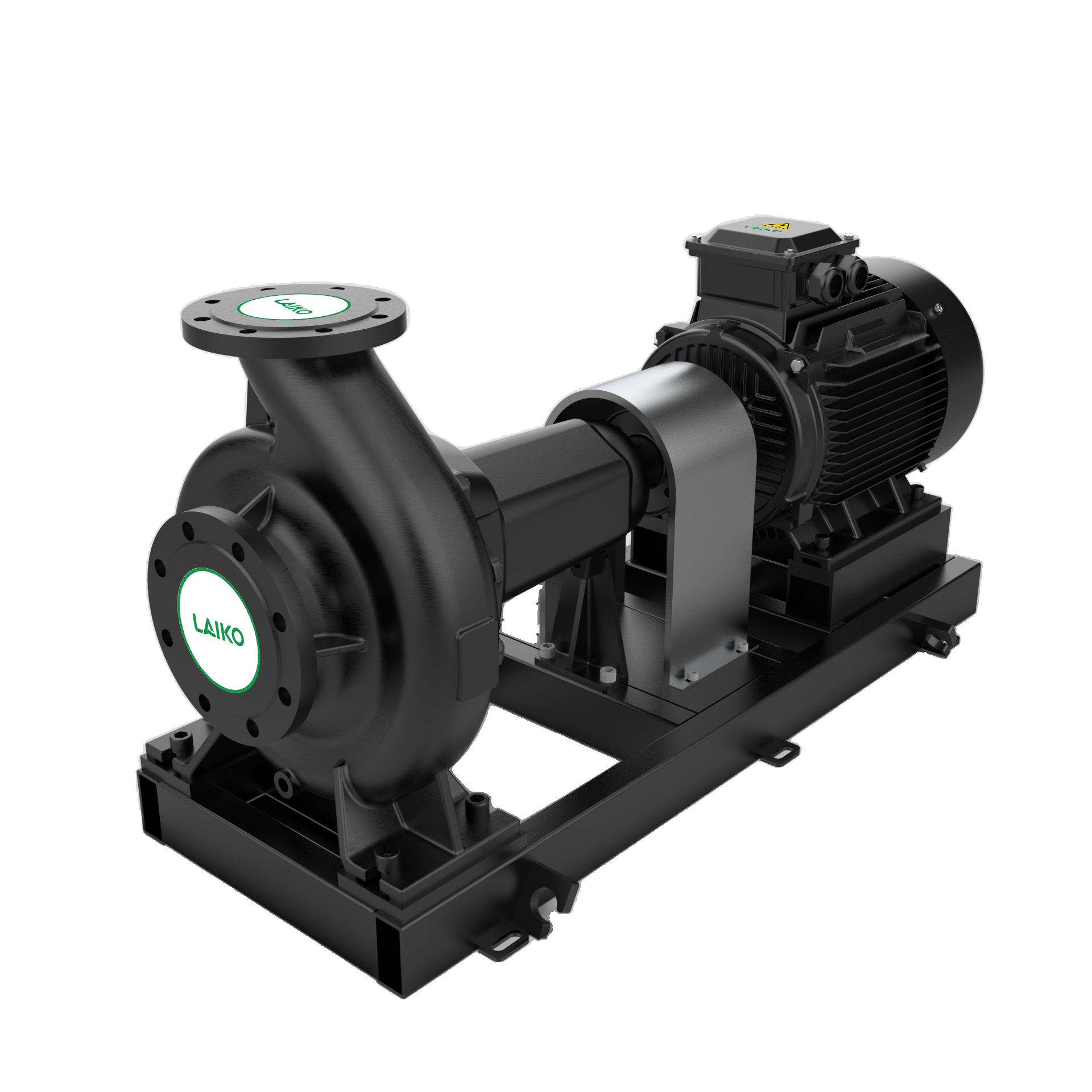
Heavier fluids exert immense radial and axial thrust on pump internals. These forces bend shafts and destroy mechanical seals. You must evaluate shaft deflection limits rigorously. Check bearing life expectancy ratings under maximum load conditions. Specifying a robust industrial end-suction pump ensures reliable handling of high-SG liquids. These heavy-duty units feature oversized shafts, premium thrust bearings, and reinforced casings to resist structural deflection.
Structural Evaluation Criteria for High-SG Fluids
Component | Standard Water Application | High-Density Fluid Application |
|---|---|---|
Shaft Diameter | Standard L3/D4 ratio | Oversized to prevent deflection |
Impeller Design | Standard enclosed | Reinforced shrouds, semi-open options |
Baseplate | Formed steel | Cast iron or heavy fabricated steel |
4. Implementation: Selecting Industrial Single-Stage End-Suction Pumps
Why this Configuration
Chemical processing and mining sectors heavily favor industrial single-stage end-suction pumps. They represent the industry standard for chemical and heavy fluid transfer. The simplified overhung impeller design allows rapid maintenance. Technicians utilize the back-pullout feature to service seals without disturbing heavy suction piping. Robust casing designs contain the elevated internal pressures generated by heavy liquids safely. This configuration balances high efficiency against rugged durability.
Coupling Considerations
Mechanical power transmission requires careful analysis. We highly recommend utilizing a direct-coupled end-suction pump for high-density applications. Direct coupling minimizes power transmission losses significantly compared to belt-driven alternatives. High specific gravity fluids demand massive starting torque. Belts frequently stretch, slip, or snap under these extreme startup loads. A direct-coupled arrangement ensures all motor torque transfers seamlessly directly into the pump impeller.
Impeller Trimming vs. VFDs
You face two distinct choices for managing power draw on dense fluids. You can physically trim the impeller diameter to hit an exact duty point. Trimming permanently limits the maximum power the pump can consume. It acts as a foolproof mechanical safeguard against motor overload. Alternatively, you can utilize a Variable Frequency Drive (VFD). A VFD manages power draw dynamically by reducing motor RPM. We suggest VFDs for processes experiencing frequent fluid density changes or variable temperature states.
5. Shortlisting Logic: Vetting Pump Manufacturers
Data Transparency
Demand absolute data transparency from potential vendors. Do they provide performance curves dynamically corrected for your specific fluid's specific gravity and viscosity? Reputable manufacturers utilize advanced sizing software. They should generate tailored curves showing the exact brake horsepower requirements for your heaviest fluid state. Refuse generic water curves. They provide zero value for industrial chemical applications.
Ask vendors to provide:
SG-corrected BHP curves.
Viscosity-corrected efficiency drops.
NPSH requirements adjusted for fluid vapor pressure.
Maximum allowable working pressure (MAWP) ratings.
Testing Standards
Verify factory testing capabilities before purchasing. Will the manufacturer perform a robust factory acceptance test (FAT)? Demand a certified performance test proving the motor handles the extreme end of the performance curve. The vendor must demonstrate the equipment will not trip breakers when operating at maximum flow conditions. Proper testing guarantees field reliability and eliminates unexpected commissioning delays.
System-Level Engineering
Top-tier engineering firms evaluate your entire system network. Do they analyze the complete centrifugal pump range to place your duty point correctly? High-density fluids amplify internal vibration severely. Operating far away from the Best Efficiency Point (BEP) destroys bearings rapidly. Expert vendors match your hydraulic requirements perfectly to the pump's BEP. This precision engineering mitigates destructive radial forces and extends equipment lifespan dramatically.
Conclusion
Fluid density never changes the volumetric flow rate or the physical head of a centrifugal pump. However, density drastically changes the mechanical power required to achieve those metrics. Pumping heavy industrial fluids demands substantially more brake horsepower, heavier structural components, and precise engineering. Relying on standard water data guarantees catastrophic failure.
We recommend calculating all motor sizes based strictly on the fluid's highest possible specific gravity. Remember, maximum fluid density typically occurs at the lowest expected operating temperature. Planning for this cold-startup scenario protects your electrical infrastructure perfectly.
Follow these action-oriented next steps to ensure successful deployment:
Compile your fluid's absolute maximum specific gravity.
Document expected vapor pressure and operational temperature extremes.
Require vendors to submit SG-corrected pump curves during the RFQ process.
Verify all quoted motor sizes against the corrected end-of-curve horsepower requirements.
FAQ
Q: Does fluid density affect the flow rate of a centrifugal pump?
A: No. Centrifugal pumps act as constant volume machines. They displace the exact same volume of liquid (gallons per minute) regardless of fluid density. However, the mass flow rate (pounds per minute) increases significantly when pumping denser fluids.
Q: How does specific gravity differ from density when reading pump specs?
A: Density represents a specific physical measurement, like pounds per cubic foot. Specific gravity represents a dimensionless ratio comparing the fluid's actual density against pure water. Pump engineering formulas utilize specific gravity because it functions as a simple, linear multiplier against standard water-based baseline data.
Q: Will heating the process fluid reduce my pump's power requirements?
A: Typically, yes. Most industrial liquids expand and become less dense as they heat up. This thermal expansion lowers their specific gravity, directly reducing the required brake horsepower. However, heating fluids also increases their vapor pressure, requiring a separate evaluation for severe cavitation risks.


