


Commercial Water Pumps for Fire-Fighting Water Supply
Views: 0 Author: Site Editor Publish Time: 2026-10-12 Origin: Site


Failing to specify the correct fire-fighting water supply system instantly triggers severe code violations. This misstep delays building occupancy and creates catastrophic safety risks for occupants. Procurement leads and facility managers face immense pressure to get this right. Selecting commercial water pumps for fire protection goes far beyond standard plumbing metrics. You must strictly adhere to localized codes, especially NFPA 20 regulations. You also need specific UL/FM certifications and highly precise pressure-to-flow ratios. A simple miscalculation compromises the entire suppression network. We designed this comprehensive guide to help you navigate these complex engineering requirements. Mechanical engineers, facility professionals, and procurement teams will find a clear evaluation framework here. You will learn how to accurately assess pump architectures, control mechanisms, and hidden implementation risks before you request any vendor quotes. Understanding these elements prevents project delays. It ensures your facility remains fully compliant. You will secure approvals from local authorities faster.
Key Takeaways
Compliance dictates selection: Only UL-listed and FM-approved commercial water pumps are viable for dedicated fire-fighting systems.
Footprint vs. Capacity: The choice between end-suction and vertical multistage architectures largely depends on mechanical room constraints and vertical head requirements (e.g., high-rise vs. sprawling warehouse).
Control integration requires caution: While variable frequency/inverter technology optimizes standard domestic water, fire pump controllers require specialized, fail-safe configurations to ensure absolute reliability during emergencies.
Evaluating Core Pump Architectures for Commercial Fire Suppression
We need to compare primary pump designs based on structural advantages. You must understand application suitability and spatial footprints thoroughly. Choosing between horizontal and vertical configurations impacts long-term reliability heavily. Engineers face difficult decisions when allocating limited mechanical room space. Let us examine the foundational choices available to you.
Standard End-Suction Centrifugal Pump
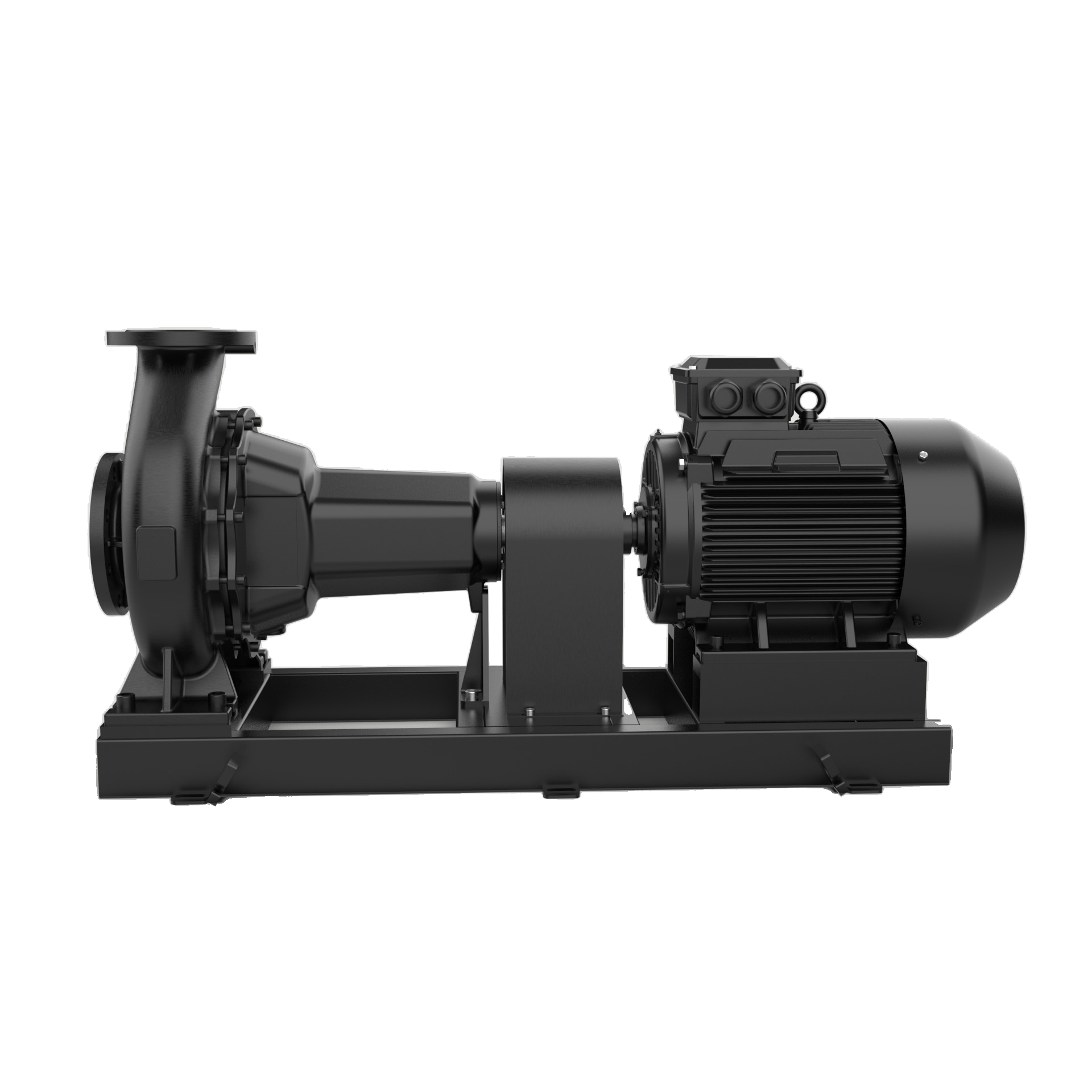
Engineers frequently specify a standard end-suction centrifugal pump for mid-size commercial buildings. They excel in industrial facilities demanding moderate flow requirements. Single-story retail expansions often rely on them due to straightforward mechanics. Warehouses utilize them for their robust performance profiles.
We value these units for their exceptional long-term durability. Their horizontal orientation provides technicians incredibly easy access during maintenance routines. You can inspect internal components quickly. You do not need to dismantle the entire piping infrastructure to reach the impeller. This accessibility reduces system downtime significantly.
You must accommodate a larger mechanical room footprint. Horizontal units consume significant floor space compared to vertical alternatives. Furthermore, piping alignment must remain perfectly exact. Any misalignment places severe mechanical stress on the pump casing. This stress causes bearing wear over time. It risks catastrophic casing failure during an emergency activation. You must install proper pipe supports and vibration isolators.
Vertical Multistage Pump for Water Supply
High-rise commercial real estate and mixed-use towers present unique hydraulic challenges. In these environments, you should carefully consider a vertical multistage pump for water supply. They perfectly suit underground mechanical rooms facing strict spatial limitations.
These dynamic units generate exceptionally high pressure. Engineers call this metric "head." They push water up dozens of building stories effortlessly. They achieve this crucial performance while maintaining a remarkably compact vertical footprint. You save valuable square footage for other critical building systems.
Technicians find them noticeably more complex to service. Stacked impellers require specialized knowledge to dismantle and repair properly. Additionally, they remain highly sensitive to water quality. Debris easily damages the intricate internal stages. Single-stage variants handle impurities much better. You must install robust filtration at the suction inlet. Proper strainer maintenance becomes a vital weekly operational task.
Table 1: Architectural Comparison of Commercial Fire Pumps
Pump Architecture | Optimal Facility Type | Space Requirement | Maintenance Accessibility |
|---|---|---|---|
Standard End-Suction | Warehouses, Mid-size Offices | Large Horizontal Footprint | High (Easy access to casing) |
Vertical Multistage | High-Rises, Urban Mixed-Use | Compact Vertical Footprint | Moderate (Complex impellers) |
Controller Technologies and Pressure Management
This section defines the precise control mechanisms dictating pump reactions. Sprinkler and standpipe networks demand immediate, automated responses to pressure drops. We must understand how dual-pump systems function securely. We will also explore modern inverters within strict fire codes.
Jockey Pumps vs. Main Fire Pumps
Commercial fire suppression mandates a reliable dual-pump setup. You cannot rely solely on your massive primary pump for minor issues. The jockey pump acts as your essential first line of defense. It handles minor pressure fluctuations seamlessly. These fluctuations arise from small pipe leaks or ambient temperature changes. The jockey pump restores system pressure automatically. This vital action prevents the main fire pump from short-cycling. Short-cycling damages heavy-duty electric motors rapidly. When a sprinkler head actually shatters, system pressure drops drastically. The small jockey pump cannot possibly keep up. At this exact engineered threshold, the main controller activates the primary fire pump. It delivers massive, sustained water flow immediately.
Constant-Pressure Inverter Water Supply System
A constant-pressure inverter water supply system provides enormous operational benefits for domestic plumbing. Inverter-driven (VFD) configurations deliver precise pressure control for daily building usage. They optimize motor speeds beautifully for standard commercial water distribution.
Fire protection operates under a radically different regulatory environment. You face severe legal and safety risks here. If you use variable speed technology for fire suppression, you face strict limits. You must utilize a highly specialized, UL-listed Variable Speed Fire Pump Controller. Standard commercial inverters cannot be legally repurposed for fire-fighting. Code mandates strict fail-safe requirements unconditionally. A fire pump must run to destruction to save the building. It cannot shut down merely to protect its own motor from thermal overload. Standard commercial inverters prioritize self-protection heavily. They will shut down during dangerous current spikes. This self-protection violates NFPA 20 standards completely. Never substitute domestic inverters for listed fire pump controllers.
Sizing Criteria and Infrastructure Requirements
You need accurate foundational engineering data to source correct commercial water pumps. Guesswork leads to immediate compliance failures and unsafe buildings. Let us map out the critical infrastructure variables you must calculate before purchasing.
Engineers follow a strict sequence when mapping out foundational data:
Hazard Analysis: Determine the combustibility of building contents to establish baseline flow demands.
Hydraulic Mapping: Calculate friction loss through every pipe fitting and valve across the most demanding sprinkler branch.
Pressure Profiling: Identify the exact PSI required at the hydraulically most remote sprinkler head.
Curve Matching: Select a pump impeller trim intercepting precise flow and pressure requirements without overloading the driver.
Flow (GPM) and Pressure (PSI) Calculations
Building hazard classifications dictate your exact performance curve requirements. You must categorize your facility accurately. The primary classifications include Light, Ordinary, and Extra Hazard.
Light Hazard: Spaces like corporate offices or churches require lower Gallons Per Minute (GPM).
Ordinary Hazard: Retail stores and parking garages demand moderate flow and pressure.
Extra Hazard: Chemical storage warehouses demand massive GPM and extreme Pounds Per Square Inch (PSI).
Your fire protection engineer must produce an approved hydraulic calculation report. This comprehensive report acts as the sole baseline for sizing your pump. It accounts for pipe friction, elevation changes, and specific sprinkler head K-factors. You base all procurement documentation on this exact report.
Power Source Evaluation: Electric vs. Diesel
Your power source choice impacts structural facility design heavily. We evaluate the two primary drivers below.
Electric motors operate quietly and run much cleaner. You spend significantly less time on routine engine maintenance. Facility teams appreciate their operational simplicity. However, they rely entirely on a hyper-reliable municipal electrical grid. If your local grid fails during an emergency, you face disaster. You must install robust on-site backup generators. You must also route power through a complex, fire-rated automatic transfer switch.
Diesel engines provide complete, rugged independence from the municipal electrical grid. They remain the ideal choice for remote commercial sites. High-risk industrial facilities also favor them heavily. However, facility managers face higher mechanical maintenance burdens. You must schedule regular fuel polishing to prevent diesel degradation. You must design adequate exhaust ventilation extending outside the mechanical room. Diesel units also demand a significantly larger physical footprint. They require dedicated fuel storage tanks nearby.
Water Source Integration
You must meticulously design the pump suction infrastructure. Connecting directly to municipal water mains requires careful pressure monitoring. A sudden drop in city pressure can cause destructive cavitation inside the pump casing. Cavitation destroys metal impellers rapidly.
Alternatively, dedicated on-site fire water storage tanks provide absolute volume control. Tanks ensure you possess guaranteed water volume during any emergency scenario. You do not worry about municipal main breaks. However, drafting water from an atmospheric tank requires special engineering. You must utilize specialized priming mechanisms. Often, engineers specify vertical turbine configurations instead. Vertical turbines ensure the pump bowls remain constantly submerged, providing fail-safe flooded suction. You must also install vortex inhibitors inside the tank per NFPA 22 guidelines.
Hidden Implementation Risks and Vendor Shortlisting
Buyers must evaluate manufacturers and integration partners beyond basic spec sheets. A fantastic pump fails completely if the vendor lacks commissioning expertise. Let us explore the hidden implementation risks. These risks frequently delay final building occupancy.
The "Listed and Approved" Mandate
Local fire marshals look for specific certification tags immediately. You must verify that the entire assembly holds current UL/FM approvals. This strict mandate includes the pump, the driver, and the controller. Some buyers mistakenly purchase unlisted components to expedite shipping. An unlisted electric motor paired with a listed pump invalidates the entire system. Inspectors will immediately red-tag the mechanical room. You must demand consolidated, factory-issued certification documents from your vendor. Never assemble a makeshift skid from disparate, unlisted parts.
Lead Times and Commissioning Support
Commercial fire pumps rarely sit assembled on warehouse shelves. Manufacturers build them as custom engineered assemblies based on your hydraulic calculations. You must evaluate vendors rigorously on their promised delivery timelines. Manufacturing delays cascade aggressively through your entire construction schedule.
Furthermore, assess their field commissioning capabilities. Ensure they provide factory-certified technicians for the initial system start-up. Acceptance testing requires precise, highly choreographed coordination. The factory technician, the installing contractor, and the local authority having jurisdiction must align perfectly. If the vendor cannot supply field support, your final inspection will fail.
Lifecycle Maintenance Accessibility
NFPA 25 mandates strict weekly, monthly, and annual inspection routines. You must assess the local availability of OEM replacement parts before purchasing. Ask potential vendors about their regional service networks explicitly.
Consider the rigorous testing required by NFPA 25. Facility teams must perform no-flow churn tests weekly for diesel pumps and monthly for electric units. They must also execute a full-flow annual test using calibrated flow meters. During these tests, technicians monitor bearing temperatures, casing vibrations, and packing gland leakage. If any metric falls outside accepted tolerances, immediate repair is mandatory. Therefore, your selected pump must feature easily accessible diagnostic ports. Complex, proprietary designs block maintenance access. They will frustrate your facilities team and increase downtime during critical repair windows.
Can they dispatch certified technicians rapidly? If a pump fails a weekly churn test, your building enters a mandatory fire watch protocol. You cannot safely occupy the building. You cannot afford to wait weeks for a specialized technician to arrive. Prioritize vendors offering robust local support infrastructure. Confirm they stock critical consumable parts locally.
Conclusion
Purchasing commercial water pumps for fire-fighting represents a strictly compliance-driven, high-stakes process. You cannot compromise on life safety engineering. Evaluating your specific architecture—whether end-suction or vertical multistage—must align tightly with physical building constraints. Your selected control system must strictly satisfy local fire marshal requirements. Avoid repurposing standard plumbing equipment for emergency fire suppression duties.
Next Step: Finalize your detailed hydraulic calculation reports with a licensed fire protection engineer immediately. Only after securing these stamped calculations should you submit your Request For Quotes (RFQs). Send these RFQs strictly to verified, certified pump manufacturers. This ensures your procurement process remains accurate, fully legal, and focused on absolute reliability.
FAQ
Q: Can I use a standard commercial water pump for a fire sprinkler system?
A: No. It must be specifically designed, tested, and listed (e.g., UL/FM) for fire protection to ensure it functions under extreme conditions without thermal or electrical self-protection shutting it down.
Q: Why is a standard end-suction centrifugal pump common in commercial fire protection?
A: They offer a proven, highly reliable design with straightforward maintenance access, making them ideal for standard commercial hazard classifications where mechanical room space allows.
Q: When should a constant-pressure inverter water supply system be considered?
A: Primarily used for standard domestic/commercial water pressure boosting. In fire applications, variable speed technology is only used via highly specialized, code-compliant VFD fire pump controllers to manage extreme suction pressure fluctuations, never standard commercial inverters.


